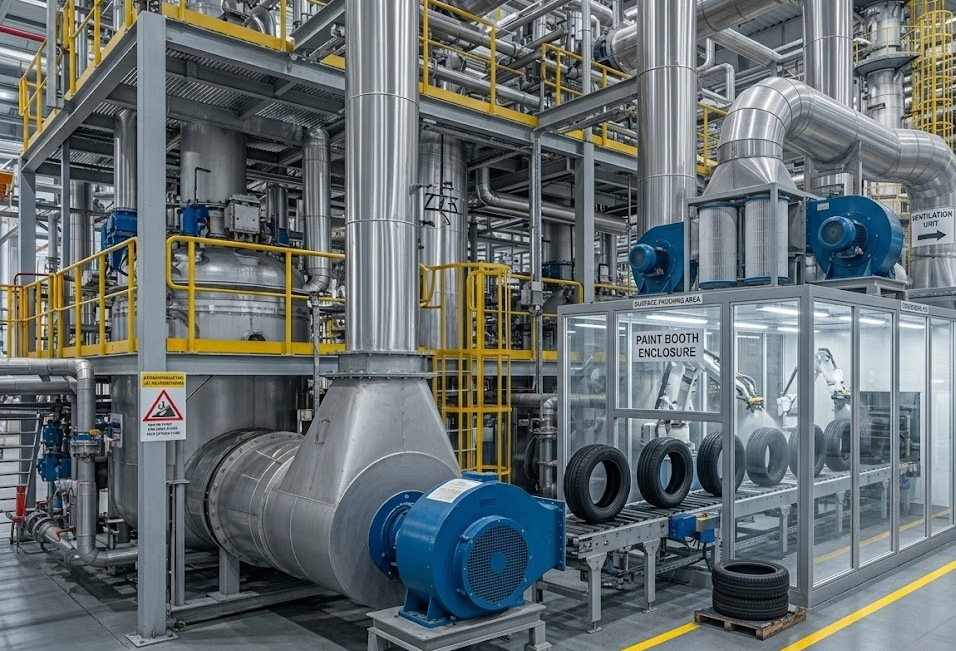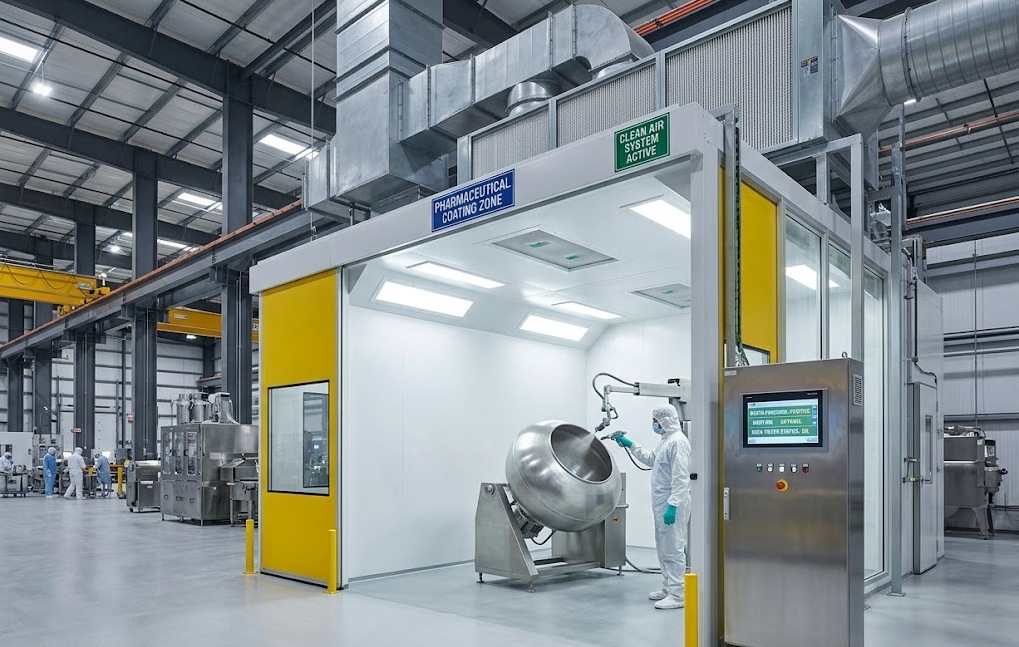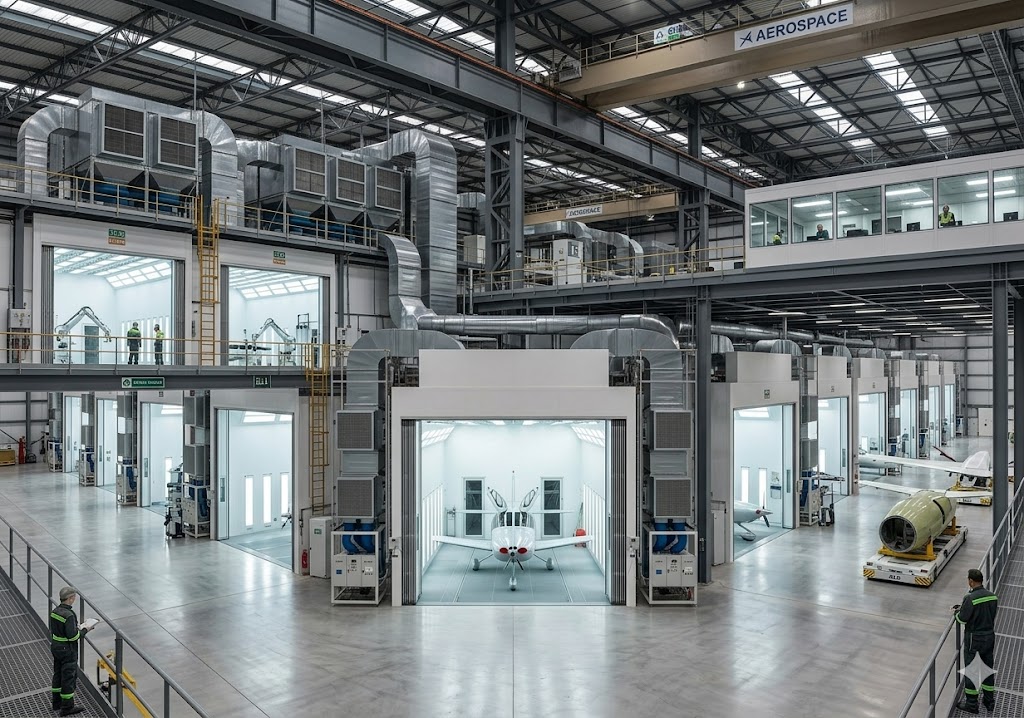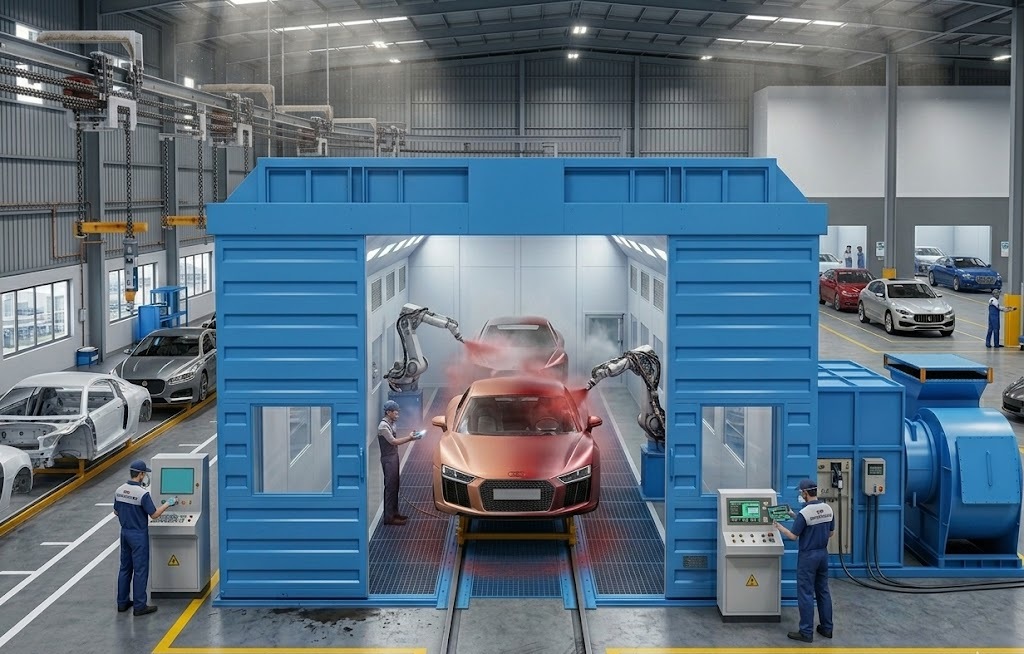
In industrial painting operations, overspray is often treated as an unavoidable loss. However, its real impact goes far beyond paint wastage. It affects finish quality, productivity, maintenance, and compliance.
Across automotive, heavy fabrication, food equipment, and pharmaceutical manufacturing, paint booths are critical for delivering consistent coating quality. Without proper airflow design, these booths fail to control overspray effectively.
Overspray is not just wasted material—it is a sign of inefficient airflow and hidden operational losses.
The Real Impact of Overspray
Overspray creates a ripple effect across operations. When paint particles are not properly captured, they settle on surfaces, equipment, and finished products—leading to defects and rework.
Airborne mist reduces visibility, affecting operator precision, while buildup in filters and ducts reduces system efficiency and increases energy use.
- Increased paint wastage and cost
- Surface defects and rework
- Reduced visibility and operator efficiency
- Frequent maintenance and filter clogging
- Higher energy consumption
Over time, these issues reduce productivity and increase operational expenses.
Why Paint Booth Systems Fail
Many paint booths are designed as enclosures rather than engineered airflow systems. Basic exhaust setups fail to maintain uniform airflow, leading to turbulence and uncontrolled particle movement.
- Uneven airflow distribution
- Poor air velocity control
- Inefficient filtration
- Weak exhaust design
This results in ineffective overspray capture and ongoing inefficiencies.
Why Traditional / Outdated Systems Fail
Conventional ventilation systems are not designed to handle fumes effectively.
- No source-level capture
- Poor handling of gaseous contaminants
- Uneven airflow and fume accumulation
- High energy use with low efficiency
- Inability to meet modern compliance standards
As a result, fumes continue to circulate, exposing workers and affecting operations.
How Proper Airflow Improves Efficiency
Effective paint booth performance depends on controlled, uniform airflow.
Engineered airflow ensures paint particles move consistently toward exhaust systems without turbulence. Multi-stage filtration captures overspray, while optimized exhaust and blower systems maintain correct velocity and pressure.
- Uniform airflow distribution
- Controlled air velocity
- High-efficiency filtration
- Optimized exhaust and blower integration
This ensures minimal wastage and consistent coating quality.
What This Means for Your Business
Optimized airflow directly improves performance across quality, cost, and safety.
- Reduced paint wastage
- Improved finish quality
- Lower rework and rejection
- Reduced maintenance costs
- Better compliance and worker safety
It transforms paint booths from cost centers into efficiency drivers.
Edynamics Approach
Edynamics focuses on airflow engineering, not just equipment supply. Systems are designed as integrated solutions combining airflow, filtration, and extraction.
- Customized airflow design
- High-efficiency filtration systems
- Optimized exhaust and blower selection
- Compliance-driven engineering
This ensures consistent, reliable paint booth performance.
Don’t Ignore This Hidden Cost
Overspray issues often go unnoticed until costs rise.
- High paint consumption
- Visible paint mist
- Frequent filter replacement
- Inconsistent finish quality
Ignoring these signs leads to long-term inefficiencies.
Evaluate Your Paint Booth Airflow
Overspray is more than wasted paint—it reflects poor airflow design.
With the right airflow engineering, businesses can reduce waste, improve quality, and enhance efficiency.
In modern manufacturing, paint booth performance depends on how well air is controlled—not just the equipment installed.