In industrial painting operations, airflow is often discussed in terms of volume and filtration—but one of the most overlooked factors is pressure balance inside the paint booth. Whether a booth operates under negative or positive pressure directly influences finish quality, contamination control, safety, and compliance.
Across industries such as automotive and auto components, heavy fabrication, food equipment manufacturing, and pharmaceutical equipment coating, paint booths are expected to deliver consistent, defect-free finishes. However, without proper pressure control, even advanced systems can underperform.
Understanding the difference between negative and positive pressure—and where each applies—is critical to achieving optimal paint booth performance.
The Real Impact of Improper Pressure Control
Pressure imbalance inside a paint booth leads to uncontrolled airflow, which directly affects coating quality and operational efficiency.
In a poorly balanced system, external air carrying dust and contaminants can enter the booth, settling on wet paint surfaces. At the same time, paint mist and fumes may not be effectively contained, leading to overspray spread and unsafe working conditions.
Improper pressure also disrupts airflow patterns, causing turbulence that results in uneven coating thickness and defects.
- Increased contamination and surface defects
- Overspray escaping into surrounding areas
- Reduced finish consistency
- Poor visibility due to airborne mist
- Higher rework and rejection rates
Over time, these issues reduce productivity and increase operational costs.
Where Pressure Control Is Most Critical
Pressure management becomes crucial in industries where coating quality and cleanliness are non-negotiable.
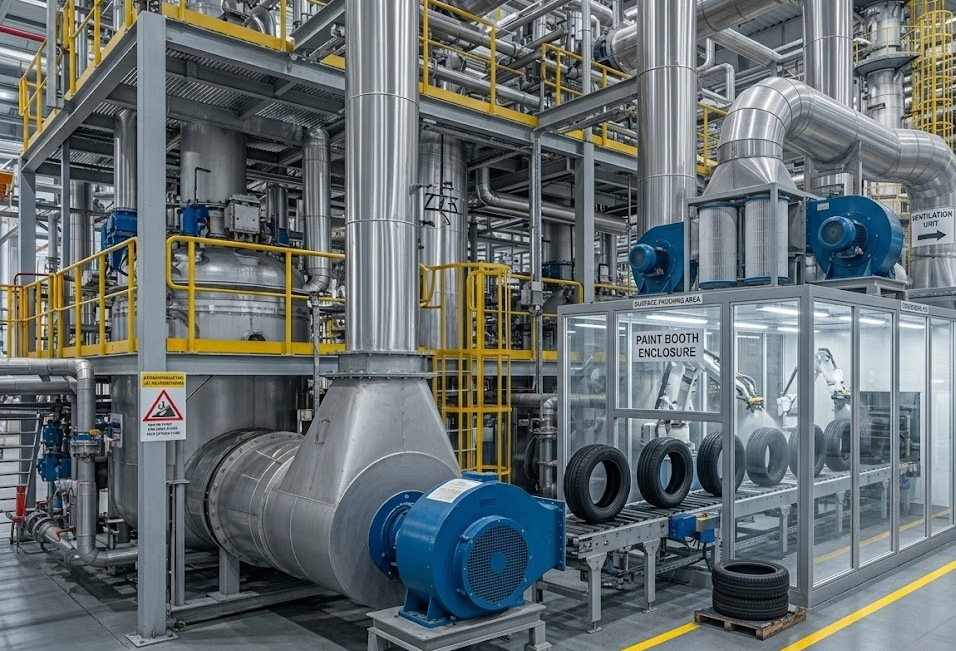
In automotive manufacturing, even minor dust contamination can result in rejection. In heavy fabrication, large components require uniform airflow for consistent coating.
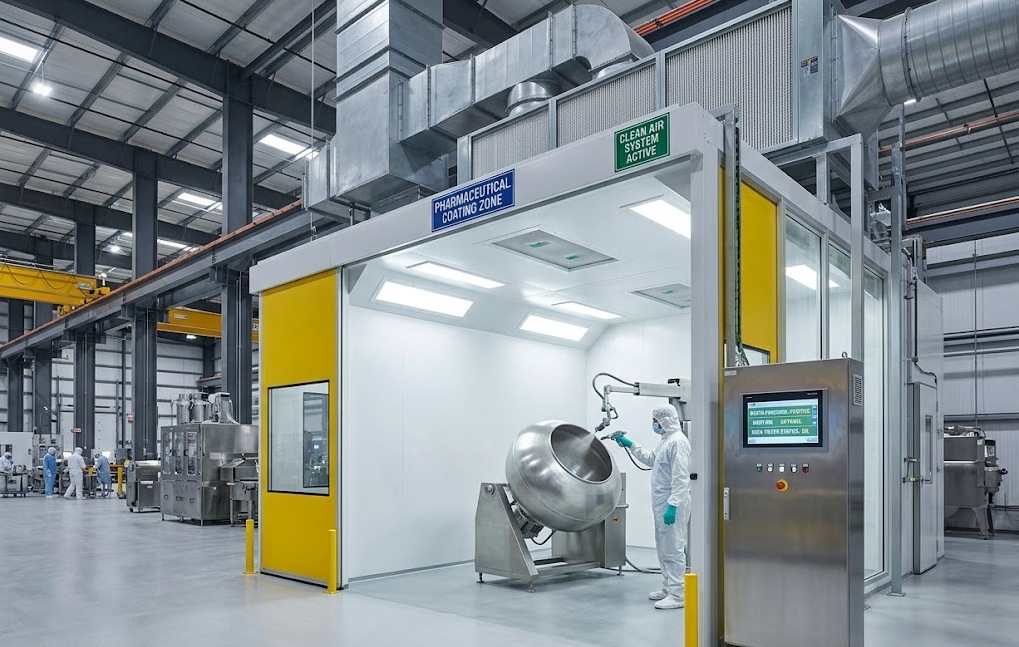
Food-grade equipment and pharmaceutical manufacturing demand clean environments where contamination must be strictly controlled. In these sectors, pressure imbalance can directly impact product quality and compliance.
In all such applications, maintaining the right pressure is essential for both performance and hygiene.
Why Most Paint Booth Systems Get It Wrong
Many paint booths are designed with a focus on airflow volume and filtration, while pressure control is treated as secondary.
Standard systems often lack proper sealing, airflow balancing, and control mechanisms. As a result, they fail to maintain consistent pressure inside the booth.
- No clear pressure design (positive or negative)
- Air leakage due to poor sealing
- Imbalance between supply and exhaust airflow
- Lack of monitoring and control systems
This leads to fluctuating pressure conditions and inconsistent performance.
Understanding Negative vs Positive Pressure
The choice between negative and positive pressure depends on the application and desired outcome.
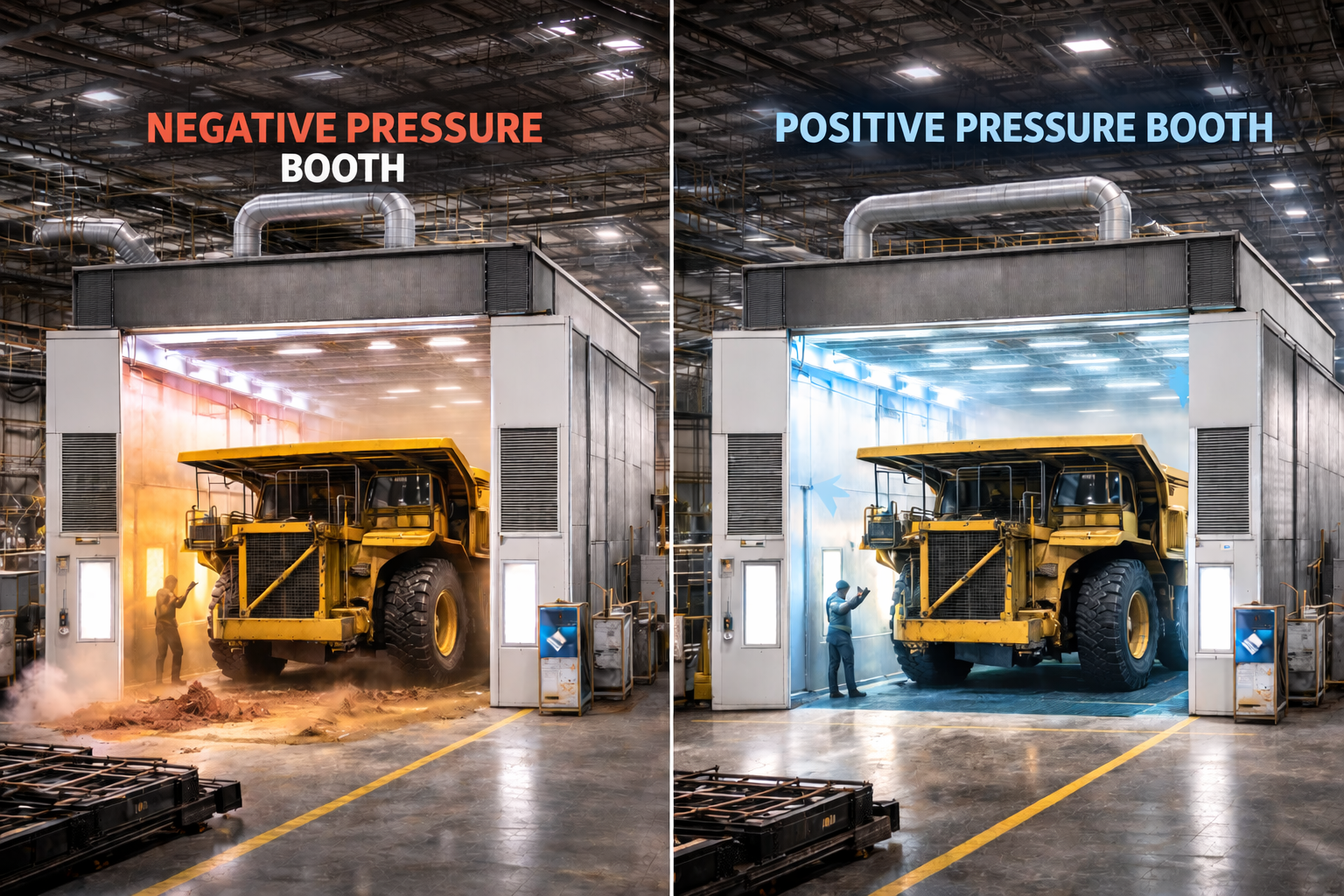
Negative pressure booths operate with higher exhaust than supply airflow. This ensures that air flows into the booth, preventing paint fumes and overspray from escaping into the surrounding environment. These are commonly used where containment of fumes is critical.
Positive pressure booths operate with higher supply airflow than exhaust. This creates an outward airflow that prevents external contaminants such as dust from entering the booth. These are preferred in applications requiring high finish quality and clean environments.
Each approach has specific advantages:
- Negative pressure: better containment of fumes and emissions
- Positive pressure: better contamination control and finish quality
The key is selecting and maintaining the right pressure based on process requirements.
How Proper Pressure Design Improves Performance
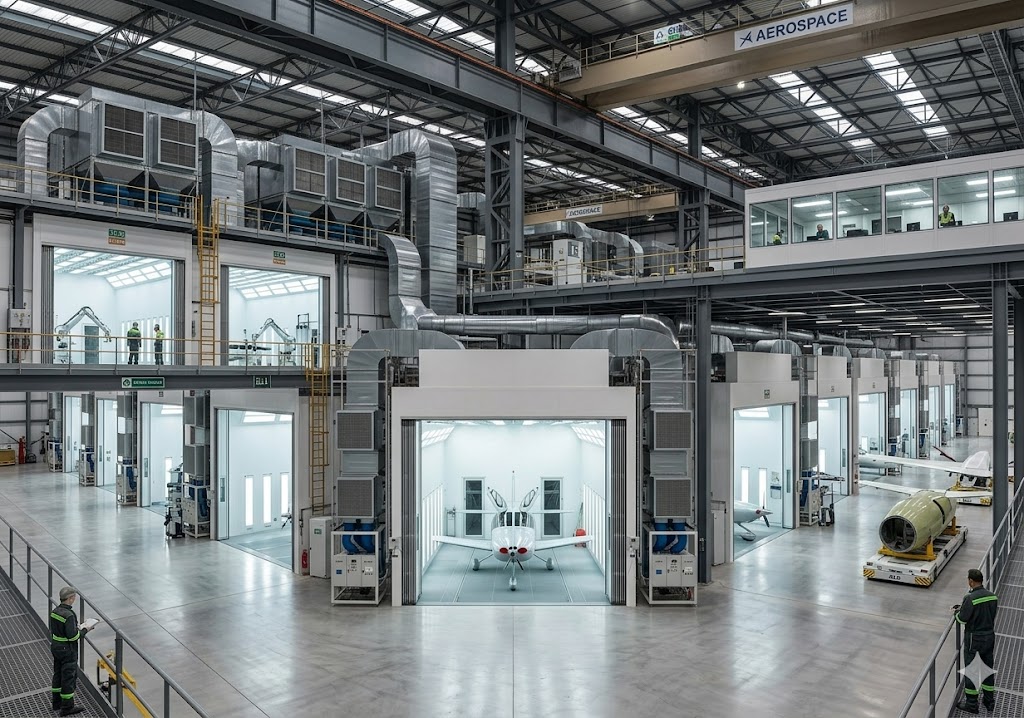
Effective paint booth systems are engineered with precise pressure control as part of the overall airflow design.
Balanced airflow ensures stable pressure conditions, preventing turbulence and ensuring smooth air movement. High-efficiency filtration systems work alongside controlled airflow to maintain clean air inside the booth.
Industrial blowers and exhaust systems are selected and configured to maintain the desired pressure consistently, even under varying operating conditions.
- Controlled balance between supply and exhaust airflow
- Uniform airflow distribution across the booth
- Integration with filtration and extraction systems
- Continuous monitoring and adjustment
This results in stable, predictable performance and high-quality coating outcomes.
What This Means for Your Business
Getting pressure control right has a direct impact on quality, safety, and cost.
- Improved finish quality with reduced contamination
- Better control of overspray and fumes
- Enhanced worker safety and visibility
- Lower rework and rejection rates
- Improved compliance with environmental standards
It ensures that your paint booth performs consistently and efficiently.
Edynamics Approach
At Edynamics, paint booth systems are engineered with a focus on airflow and pressure precision.
Each solution is designed based on application requirements, ensuring the right balance between supply and exhaust airflow. Systems are integrated with filtration, extraction, and control mechanisms to maintain stable pressure conditions.
- Application-specific pressure design
- Integrated airflow and extraction systems
- High-efficiency filtration
- Compliance-driven engineering
This ensures reliable and high-performance paint booth operation.
Get a Customized Airflow & Pressure Assessment
Pressure control is one of the most critical yet overlooked aspects of paint booth performance.
Understanding and implementing the right pressure system—whether negative or positive—can significantly improve quality, safety, and efficiency.
In modern industrial painting, success is not just about applying paint—it’s about controlling the environment in which it is applied.