In many industrial facilities, a paint booth is still perceived as a simple enclosure—a space where coating happens. However, in modern manufacturing environments, this perception is outdated and often leads to performance gaps.
Across industries such as automotive and auto components, heavy fabrication, food-grade equipment manufacturing, and pharmaceutical equipment production, paint quality is directly tied to controlled environments. A booth alone cannot deliver this control. What truly defines performance is how airflow, extraction, and filtration work together as an integrated system.
Without this integration, even well-built cabins fail to control overspray, maintain air quality, or deliver consistent finishes. This makes airflow engineering—not just the booth—the foundation of paint shop efficiency.
The Real Impact of Non-Integrated Systems
When paint booths operate without proper integration between airflow and extraction, inefficiencies quickly surface across operations.
Overspray is not effectively captured, leading to paint settling on unwanted surfaces and causing defects. Air turbulence inside the booth disrupts paint application, resulting in uneven coating thickness. At the same time, fumes and solvent vapors may accumulate, affecting worker safety and compliance.
Additionally, filters clog faster due to poor airflow direction, increasing maintenance frequency and energy consumption.
- Higher paint wastage and overspray losses
- Surface defects leading to rework and rejection
- Poor visibility due to airborne mist
- Increased maintenance and downtime
- Safety risks from fume accumulation
Over time, these issues turn the paint booth into a cost center rather than a performance driver.
Where Integration Matters the Most
The need for integrated paint booth systems is most critical in industries where finish quality, cleanliness, and compliance are essential.
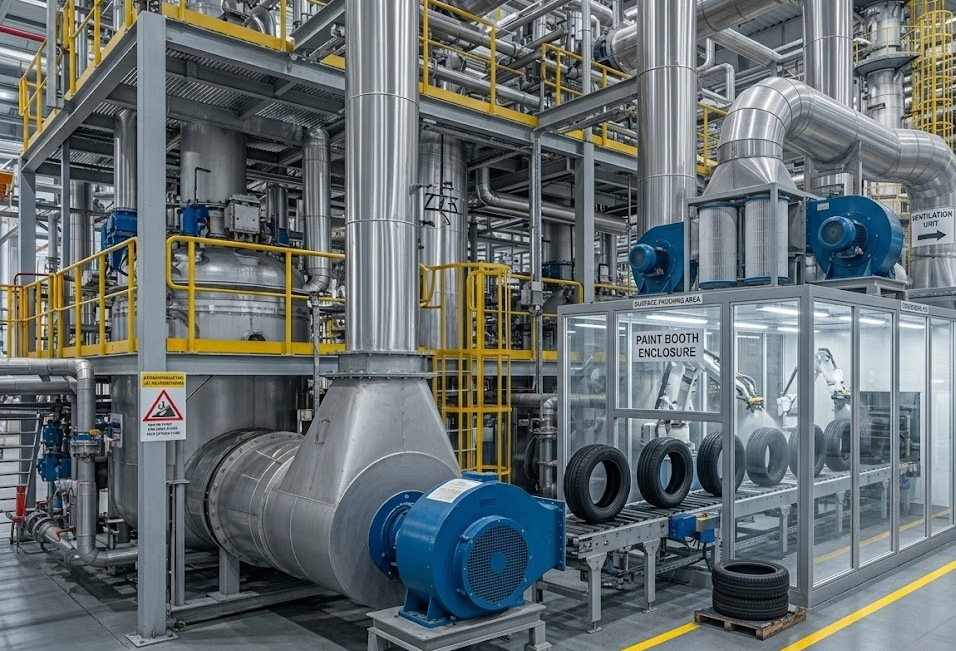
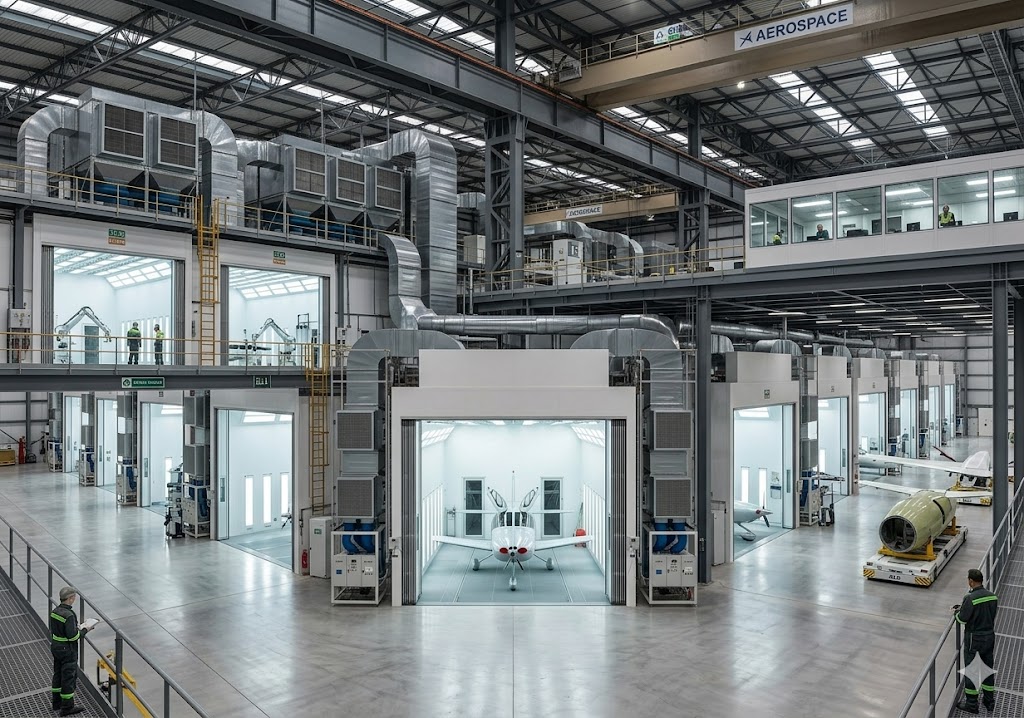
In automotive manufacturing, even minor inconsistencies in coating can lead to rejection. Heavy fabrication units require uniform airflow to coat large surfaces effectively.
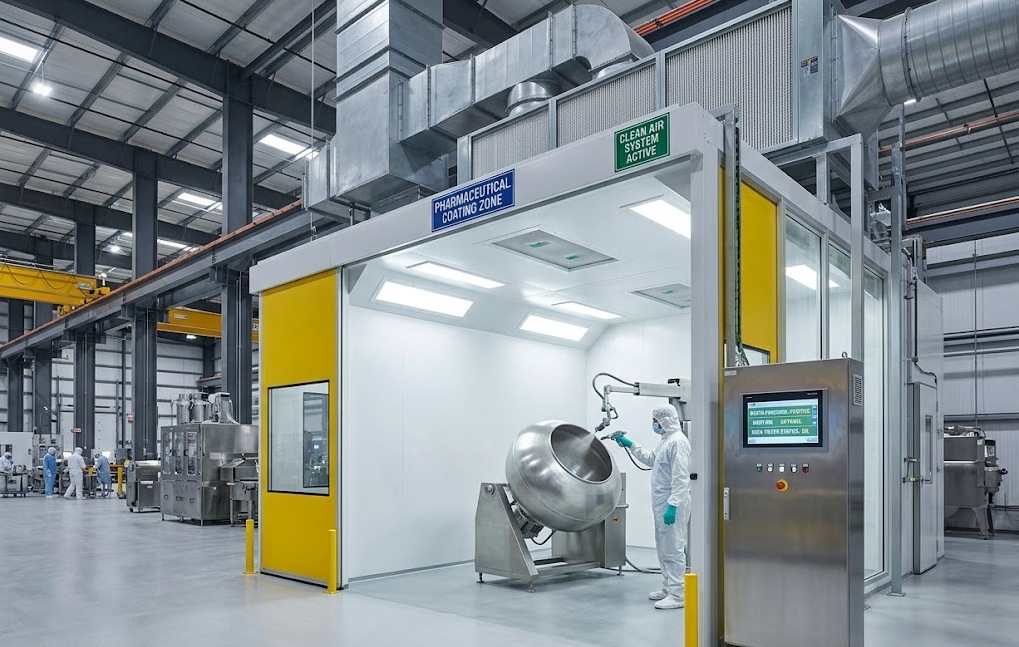
Food equipment manufacturers must maintain clean coating environments to meet hygiene standards, while pharmaceutical equipment production demands contamination-free finishes.
In all these sectors, performance depends not on the booth structure, but on how effectively airflow and extraction are engineered together.
Why Traditional Paint Booth Setups Fall Short
Many conventional paint booth systems are designed as standalone units with limited consideration for airflow dynamics.
These setups often rely on basic exhaust systems without ensuring proper air distribution or pressure balance. As a result, airflow becomes uneven, leading to turbulence and ineffective overspray capture.
- Focus on enclosure rather than airflow design
- Poor coordination between air supply and exhaust
- Lack of pressure control within the booth
- Inefficient filtration integration
This fragmented approach results in inconsistent performance and higher operational costs.
How Integrated Airflow and Extraction Systems Improve Performance
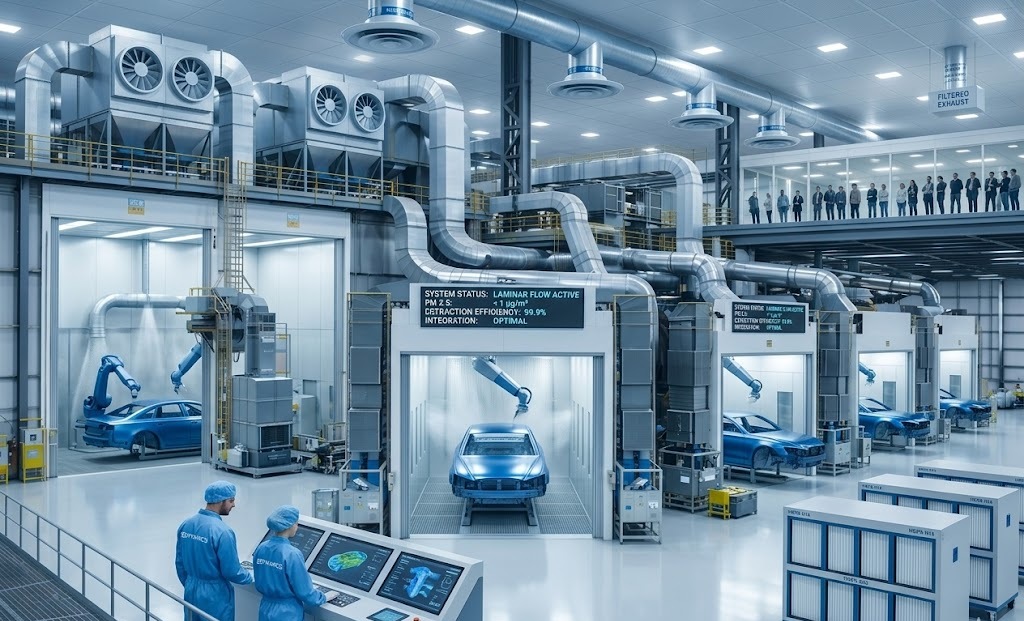
High-performance paint booths are designed as complete airflow systems, where supply air, extraction, filtration, and exhaust work in coordination.
Fresh air is introduced in a controlled manner to create uniform airflow across the booth. This airflow carries paint particles smoothly toward the extraction system without turbulence. Multi-stage filtration captures overspray effectively, preventing it from spreading or settling.
Industrial blowers and exhaust systems maintain consistent airflow velocity and pressure balance, ensuring stable operating conditions. The integration of these components ensures that both particulate matter and fumes are continuously removed.
- Uniform airflow distribution for consistent coating
- Controlled air velocity to guide overspray
- Multi-stage filtration for effective particle capture
- Balanced exhaust and blower systems
- Pressure-controlled environment for stability
This integrated approach transforms paint booths into controlled environments that deliver reliable performance.
Edynamics Approach
At Edynamics, paint booth solutions are engineered as integrated systems rather than standalone installations.
Each project begins with a detailed assessment of airflow requirements, process conditions, and production needs. Based on this, airflow distribution, extraction systems, filtration, and blower selection are designed to work together seamlessly.
- End-to-end airflow system design
- Integration of extraction and filtration systems
- Optimized blower and exhaust configuration
- Compliance-driven engineering approach
This ensures that every paint booth delivers consistent, efficient, and reliable performance
Use Cases Across Industries
In automotive plants, integrated systems ensure defect-free finishes and high throughput.
In fabrication units, they enable uniform coating on large components.
In food equipment manufacturing, they maintain clean and controlled environments.
In pharmaceutical equipment production, they prevent contamination during coating.
Don’t Overlook the Bigger Picture
If your paint booth is treated as just a cabin, performance issues are inevitable.
- Visible overspray and paint mist
- Inconsistent coating results
- Frequent filter clogging
- Rising maintenance and energy costs
These are clear signs of poor system integration.
Evaluate Your Current Paint Booth Performance
A paint booth is not defined by its structure—it is defined by how effectively air is managed within it.
Integrated airflow and extraction systems are the key to achieving consistent quality, operational efficiency, and compliance.
In modern manufacturing, the difference between average and high-performance painting lies not in the cabin, but in the system behind it.