In industrial painting operations, compliance is often viewed as a regulatory requirement—something to meet during audits or inspections. However, in reality, paint booth compliance directly impacts product quality, operational efficiency, worker safety, and overall business performance.
Across industries such as automotive and auto components, heavy fabrication, food-grade equipment manufacturing, and pharmaceutical equipment production, paint booths must operate within strict environmental and safety standards. These include control of overspray, volatile organic compounds (VOCs), airflow balance, and proper filtration.
When these factors are not properly managed, non-compliance is not just a legal issue—it becomes a hidden operational cost that affects every aspect of production.
The Real Impact of Paint Booth Non-Compliance
Non-compliance creates a chain reaction of operational, financial, and safety challenges.
Improper airflow and extraction lead to overspray escaping into the environment, resulting in material loss and contamination. Poor filtration allows harmful fumes and VOCs to remain in the workspace, affecting worker health and increasing safety risks.
From a financial perspective, non-compliance leads to penalties, production stoppages, and increased rework due to poor finish quality. Inconsistent coating conditions result in defects, requiring repainting and additional material usage.
- Fines and penalties due to regulatory violations
- Increased rework and rejection rates
- Paint wastage from uncontrolled overspray
- Worker health and safety risks
- Production delays and downtime
These factors significantly increase operational costs while reducing efficiency.
Where Compliance Matters the Most
Compliance becomes critical in industries where both quality and environmental standards are tightly regulated.
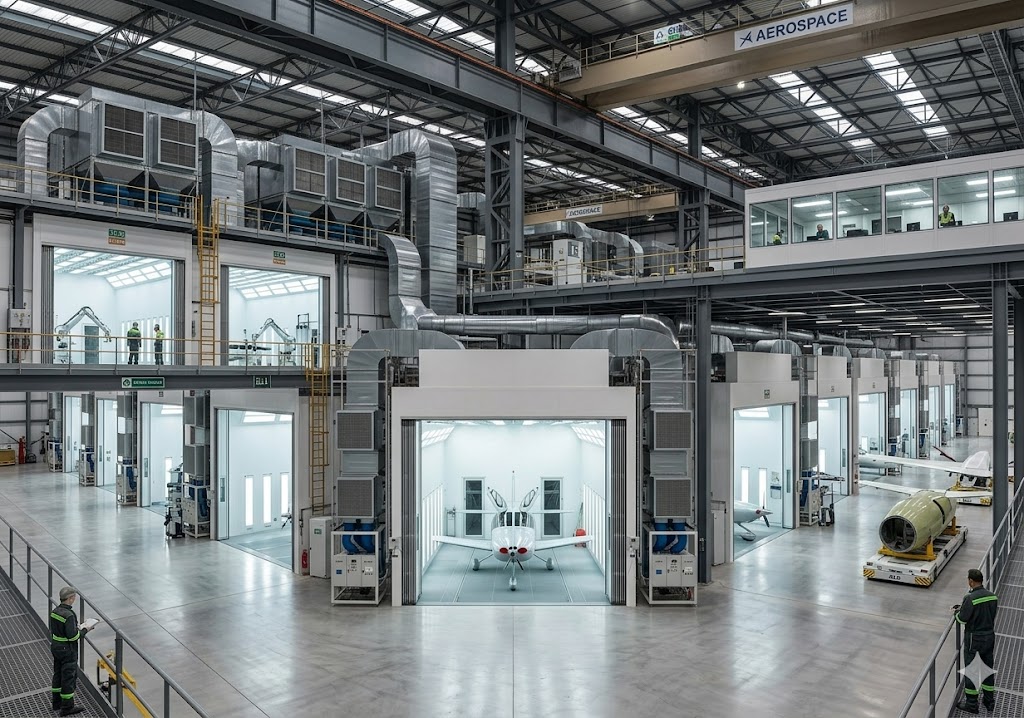
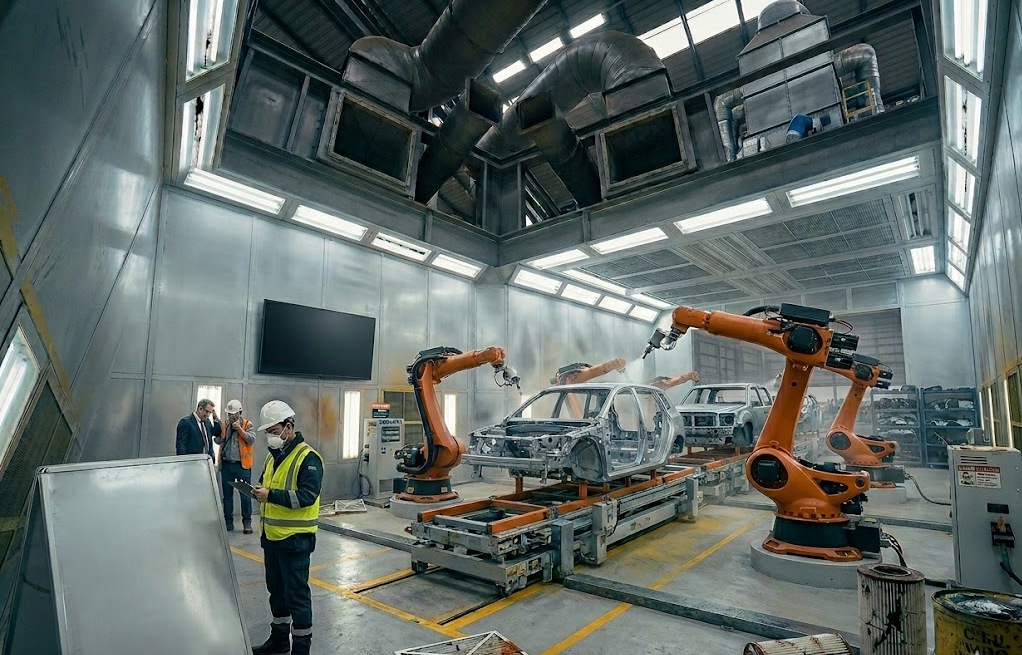
In automotive manufacturing, OEM standards demand consistent coating quality and emission control. In heavy fabrication, large-scale painting operations generate significant overspray and fumes that must be managed.
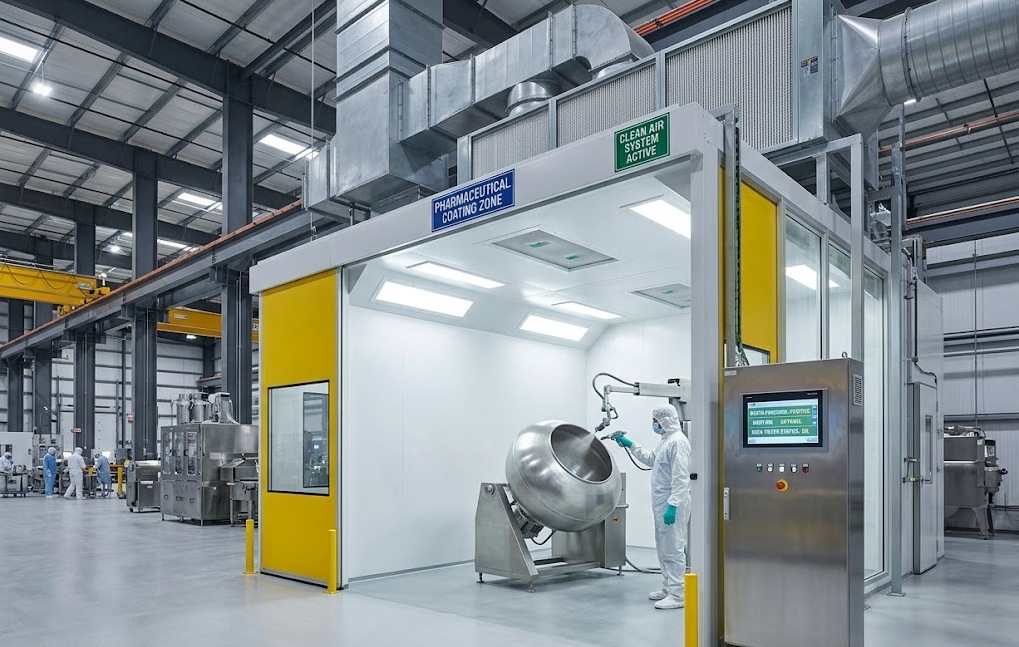
Food-grade equipment and pharmaceutical manufacturing require controlled environments to prevent contamination, making compliance even more stringent.
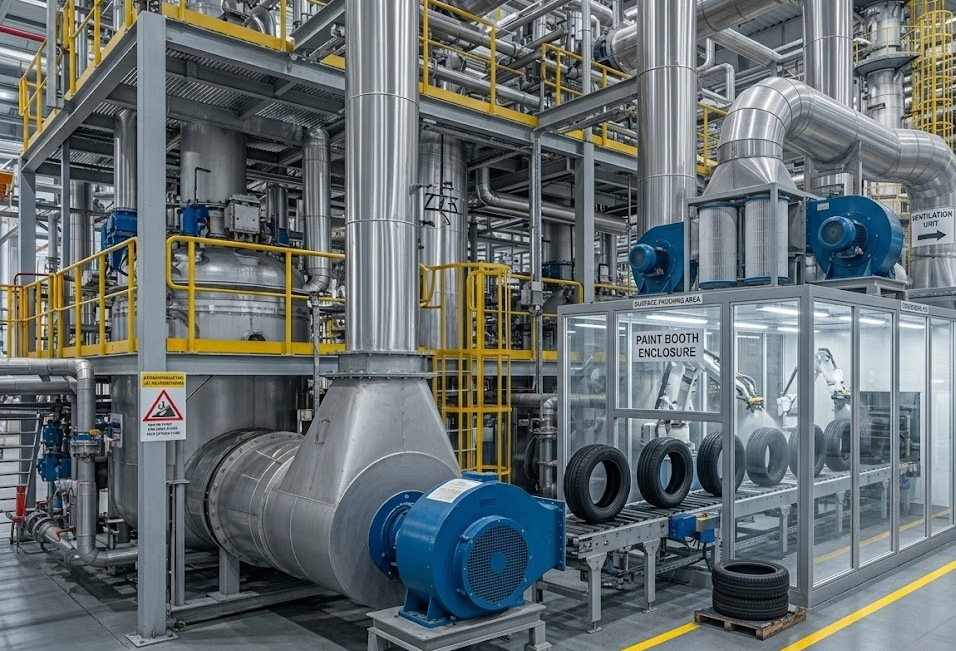
Chemical processing and related industries must also manage emissions carefully to meet environmental regulations.
In all these sectors, failure to comply can result in both regulatory action and loss of business credibility.
Why Paint Booths Fail Compliance Requirements
Many paint booth systems fail to meet compliance standards due to gaps in design and operation.
Traditional setups often lack proper airflow engineering and rely on basic filtration systems that cannot handle modern production demands. Inadequate exhaust systems fail to capture and remove contaminants effectively.
- Poor airflow distribution causing turbulence
- Inefficient filtration systems
- Lack of VOC and emission control
- Improper maintenance of filters and ducts
- No integration between airflow and extraction systems
These shortcomings result in systems that cannot consistently meet regulatory requirements.
How Engineered Systems Ensure Compliance
Achieving paint booth compliance requires a combination of proper airflow design, effective extraction, and advanced filtration.
Controlled airflow ensures that paint particles and fumes move in a defined direction toward extraction systems. Multi-stage filtration captures overspray and fine particles, while exhaust systems remove contaminated air safely.
In applications involving solvents and VOCs, additional control systems may be required to treat emissions before release. Proper ducting and industrial blowers ensure consistent airflow and pressure balance within the booth.
- Uniform airflow design to prevent turbulence
- Multi-stage filtration for particle capture
- VOC and fume extraction systems
- Optimized exhaust and ducting design
- Risk-based system configuration
This integrated approach ensures consistent compliance and safe operation.
Edynamics Approach
At Edynamics, compliance is built into the system design rather than treated as an afterthought.
Each paint booth solution is engineered based on process requirements, emission levels, and regulatory standards. Airflow, extraction, and filtration systems are integrated to ensure consistent performance.
- Compliance-driven system design
- Integrated airflow and extraction solutions
- Advanced filtration and emission control
- Focus on long-term efficiency and reliability
This ensures that your operations remain compliant, efficient, and future-ready.
Don’t Ignore the Hidden Costs
Non-compliance often starts with small issues but leads to significant losses over time.
- Rising rework and rejection rates
- Increasing maintenance and energy costs
- Poor air quality and unsafe conditions
- Frequent regulatory concerns
Ignoring these signs can result in major operational and financial consequences.
Evaluate Your Paint Booth Compliance
Paint booth compliance is not just a regulatory requirement—it is a critical factor in operational success.
By investing in engineered airflow and extraction systems, businesses can reduce risks, improve quality, and control costs.
In today’s industrial landscape, compliance is not a burden—it is a competitive advantage.