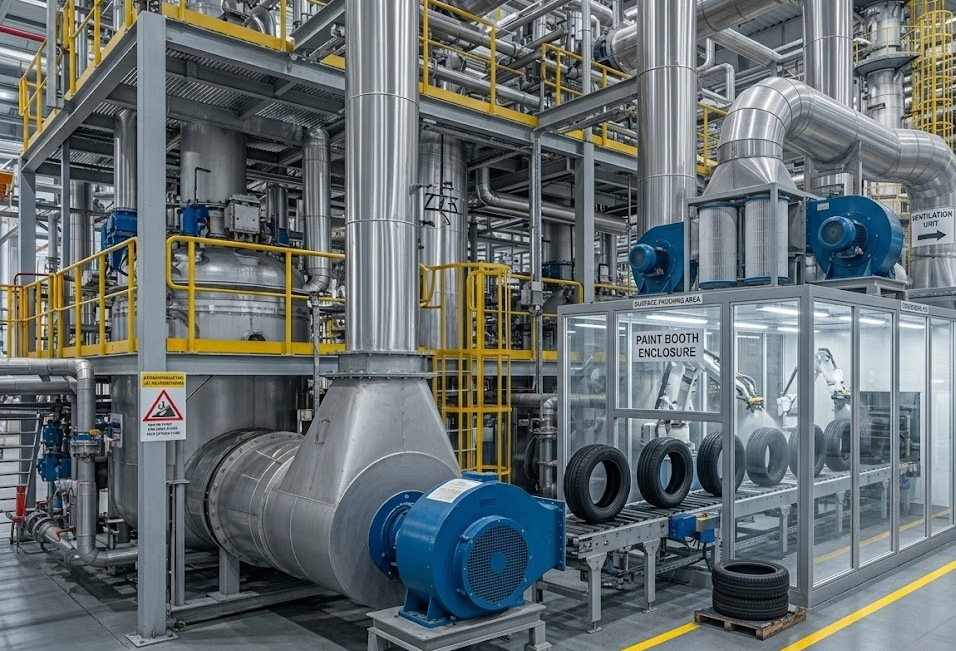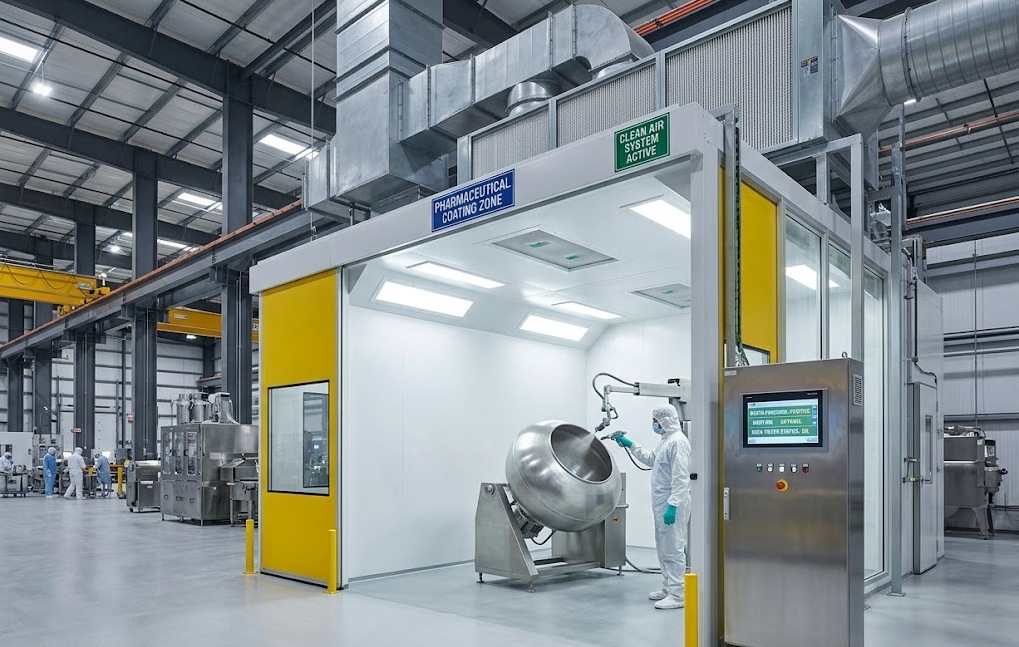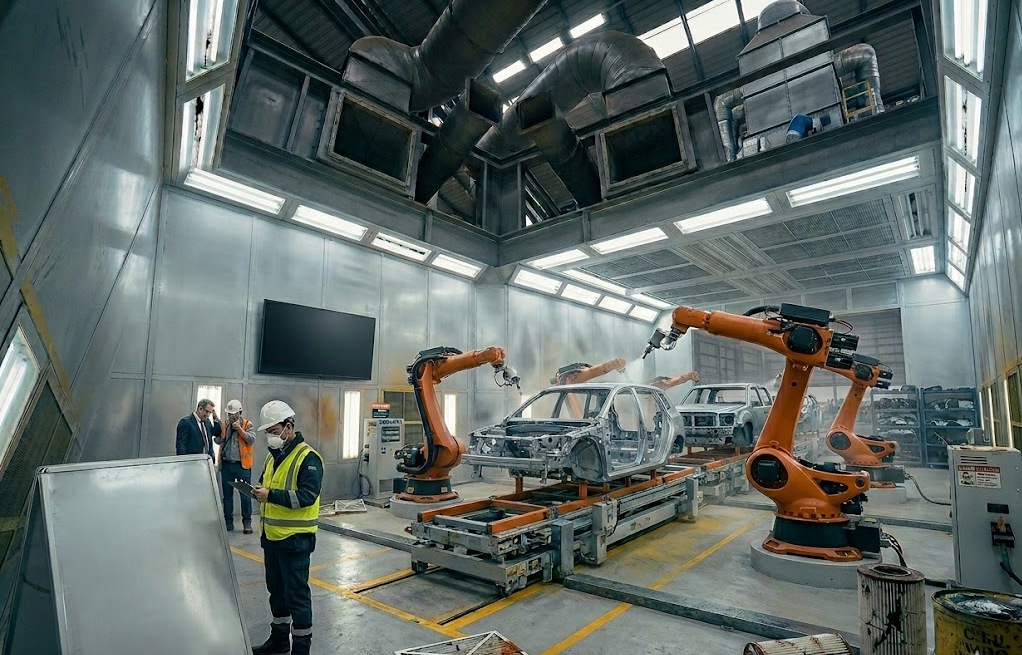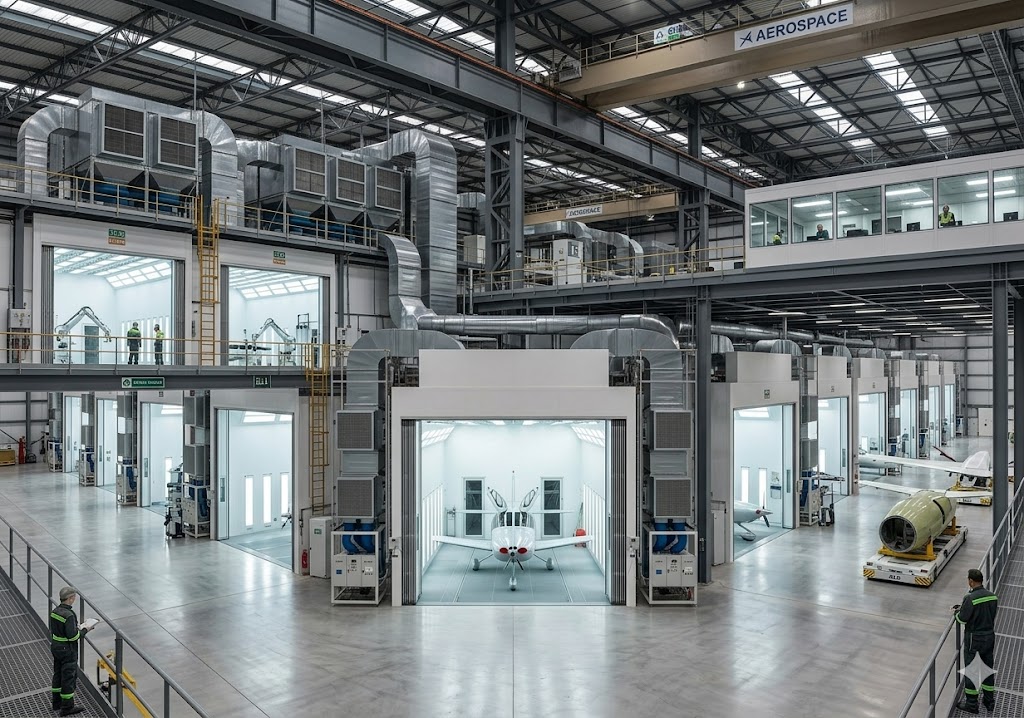
Industrial coating requirements vary significantly across industries, yet many facilities still rely on standard paint booth setups. What works in an automotive plant may not deliver the same results in a pharmaceutical or heavy fabrication environment.
Each industry operates under different conditions—ranging from dust-heavy fabrication shops to contamination-sensitive pharma facilities and hygiene-critical food equipment manufacturing. These differences directly impact how airflow, filtration, and extraction systems should be designed.
A one-size-fits-all paint booth approach often leads to inefficiencies, quality issues, and compliance risks. This makes application-specific paint booth design essential for consistent performance.
The Real Impact of Generic Paint Booth Design
Using a standard paint booth across different applications creates multiple operational challenges.
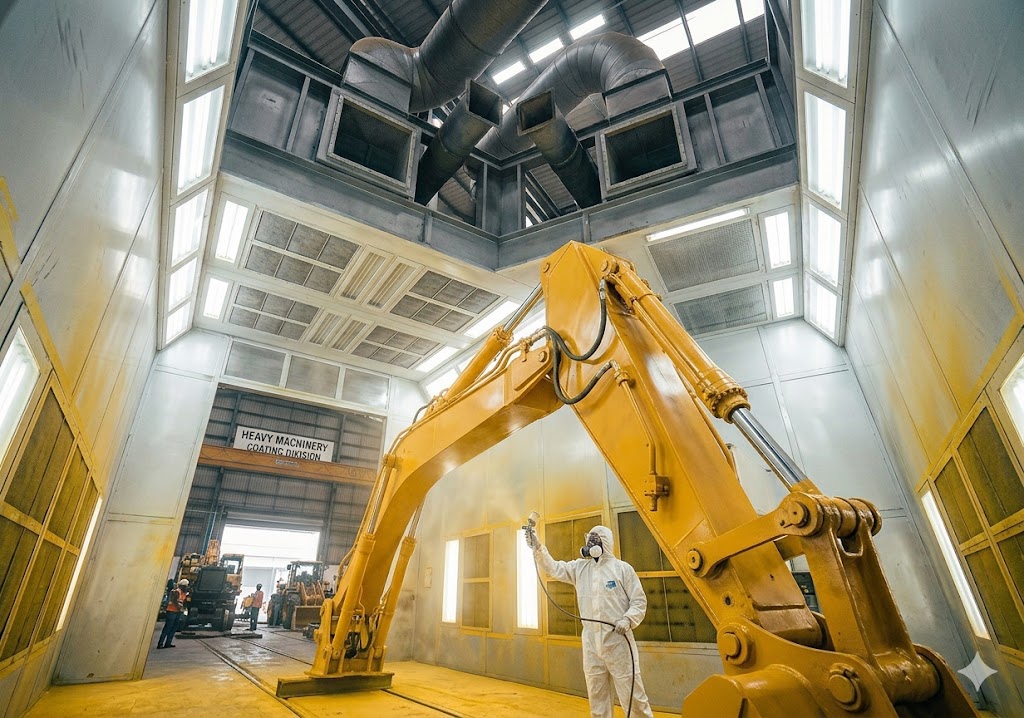
In automotive manufacturing, inconsistent airflow can lead to finish defects and rejection. In heavy fabrication, poor airflow distribution results in uneven coating on large components. In pharma and food industries, inadequate control can lead to contamination risks.
At the same time, improper extraction leads to overspray buildup, increased maintenance, and higher energy consumption.
- Surface defects and inconsistent coating quality
- Increased rework and rejection rates
- Contamination risks in sensitive environments
- Higher paint wastage and overspray
- Increased maintenance and operational costs
Over time, these issues reduce productivity and increase overall cost.
Why One-Size-Fits-All Booths Fail
Traditional paint booths are often designed with a generic approach, focusing on enclosure rather than process-specific requirements.
They fail to consider critical factors such as component size, coating type, emission levels, and environmental conditions. As a result, airflow becomes uneven, and extraction systems fail to perform effectively.
- No customization based on application
- Poor airflow distribution and pressure control
- Inefficient filtration for specific processes
- Lack of integration between airflow and extraction
This leads to inconsistent performance across different industries.
How Application-Specific Paint Booth Design Solves This
Effective paint booth systems are engineered based on the specific needs of each industry and process.
Airflow design is tailored to ensure uniform distribution, whether for small precision components or large fabricated structures. Filtration systems are selected based on the type of coating and level of contamination control required.
Extraction systems are designed to handle overspray, fumes, and vapors efficiently, while maintaining proper pressure balance inside the booth.
- Customized airflow design for uniform coating
- Application-specific filtration systems
- Optimized extraction for overspray and fumes
- Pressure-controlled environments for stability
This ensures consistent performance across diverse industrial applications.
Edynamics Approach
Edynamics designs paint booth systems with a strong focus on application-specific engineering.
Each solution is tailored based on industry requirements, process conditions, and production needs. Airflow, extraction, and filtration systems are integrated to deliver consistent and reliable performance.
- Customized system design
- Integrated airflow and extraction solutions
- Industry-specific engineering approach
- Compliance-driven design
This ensures optimal performance across different industries.
Optimize Your Paint Booth for Your Industry
Different industries face different coating challenges, and paint booth design must reflect these differences.
Application-specific engineering ensures that airflow, filtration, and extraction systems work together to deliver consistent results.
In modern manufacturing, performance is not defined by the booth alone—but by how well it is designed for your process.