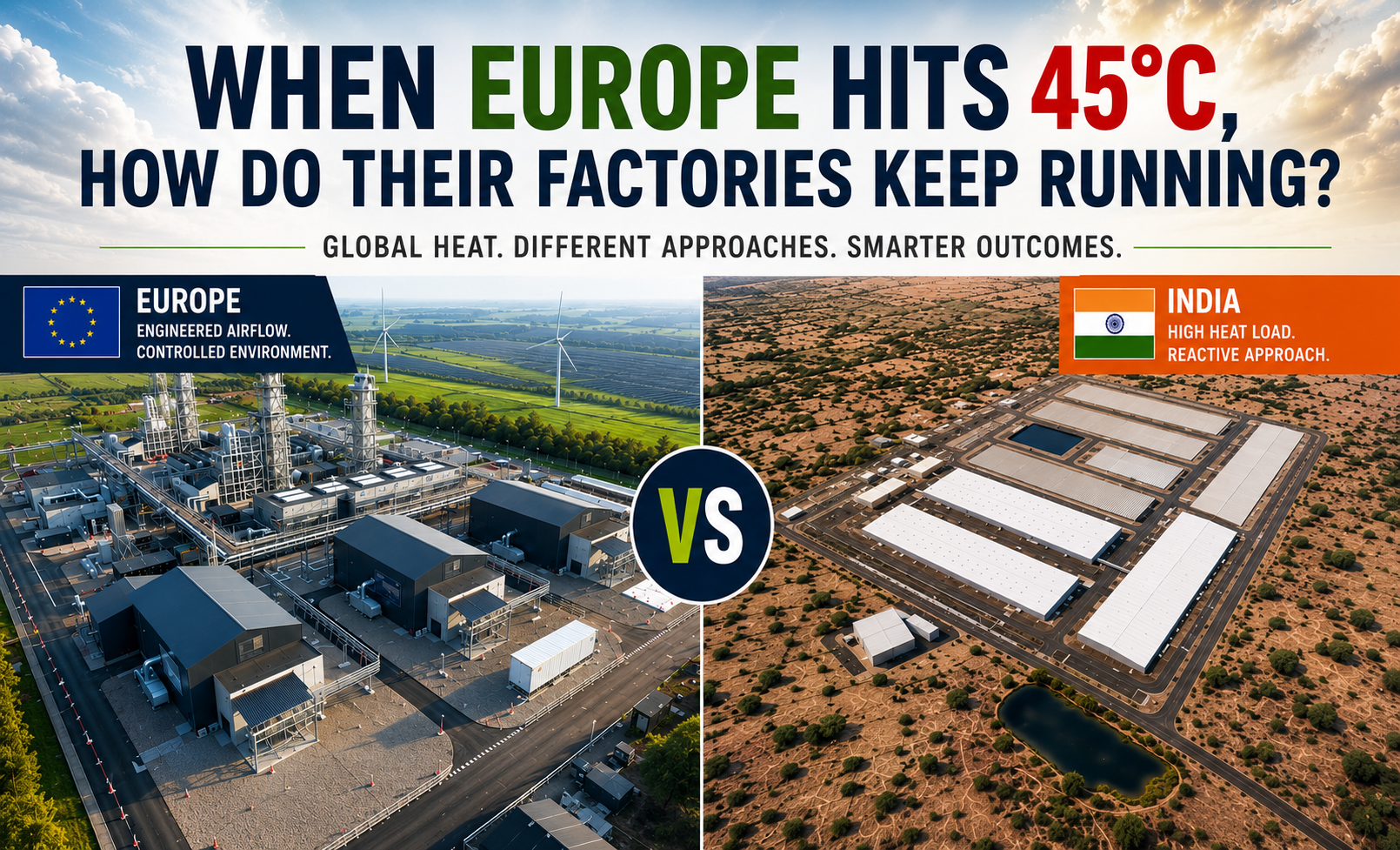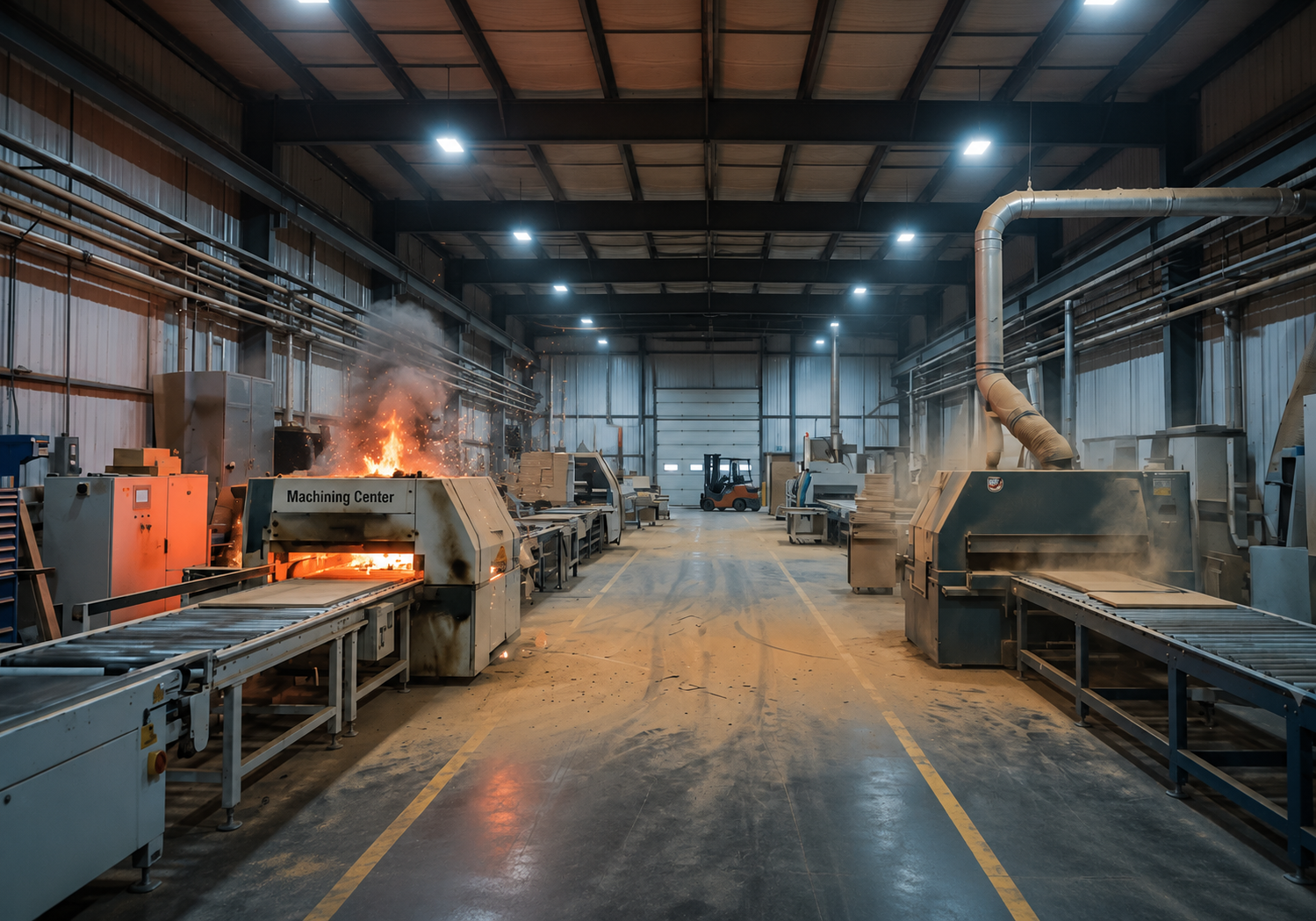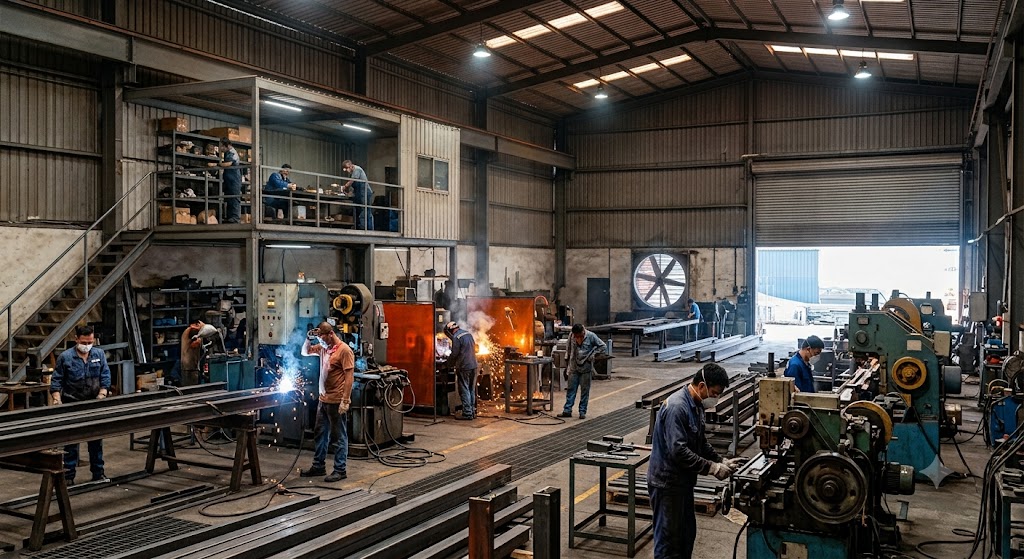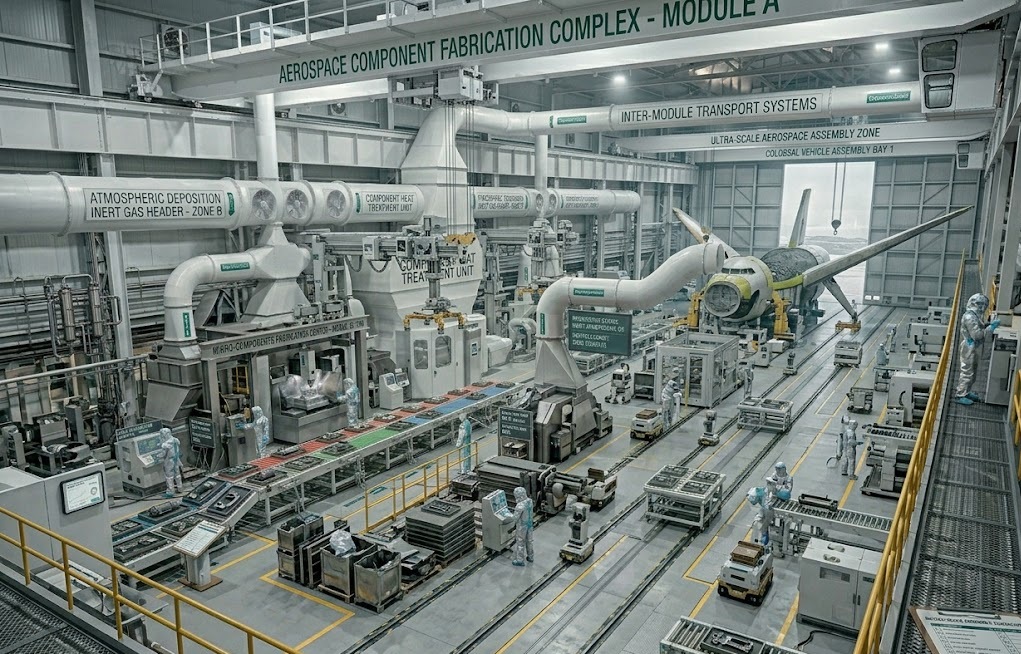
In large manufacturing facilities, airflow is often assumed to be “good enough” as long as air is moving. But in reality, uneven airflow is one of the most overlooked causes of inefficiency.
While some areas experience excessive heat and stagnation, others may receive unnecessary airflow—creating an imbalance that affects both workforce performance and process stability.
This issue is especially critical in heavy fabrication, food processing, automotive, and pharmaceutical industries, where consistency in environmental conditions directly impacts productivity and quality.
The Real Impact of Uneven Airflow
When airflow is not properly distributed across a facility, the consequences are subtle at first—but become significant over time.
- Localized heat zones develop, particularly around welding stations, ovens, and high-load machinery, creating discomfort and reducing efficiency in specific areas.
- Certain sections of the plant remain under-ventilated, leading to stagnant air, poor oxygen levels, and increased fatigue among workers.
- Process inconsistencies begin to emerge, especially in industries like food processing and pharmaceuticals where environmental control is critical.
- Energy inefficiency increases, as systems overcompensate in some areas while failing in others.
- Operational performance becomes unpredictable, with output varying across shifts and zones.
These issues often go unnoticed because the problem is not system failure—but system imbalance.
👉 In large facilities, airflow is not just about movement—it’s about precision and uniformity.
Where This Challenge Is Most Critical
- In heavy fabrication facilities, uneven airflow leads to concentrated heat zones near welding and cutting operations.
- In food processing plants, inconsistent airflow can impact temperature-sensitive processes and hygiene conditions.
- In automotive manufacturing units, airflow imbalance affects worker comfort across assembly lines and machining areas.
- In pharmaceutical facilities, even slight inconsistencies can lead to compliance risks and process deviations.
Across these industries, uniform airflow is essential not just for comfort—but for consistent production outcomes.
Why Traditional Ventilation Systems Fall Short
Most conventional ventilation systems are designed with a focus on air volume, not airflow distribution.
As a result:
- Ducting systems are not optimized for large-scale layouts
- Air is not directed based on process zones
- No zoning strategy is implemented
- Systems are not calibrated for real-time airflow balance
This leads to a situation where airflow exists—but is not effectively utilized.
The result:
Some areas are over-served, others under-served—and overall efficiency suffers.
How Industrial Ventilation Systems Ensure Uniform Airflow
A well-engineered ventilation system addresses airflow as a designed parameter, not a byproduct.
It ensures:
- Uniform airflow distribution across the entire facility
- Zone-based ventilation design, aligned with process intensity
- Airflow balancing mechanisms to eliminate hot and cold spots
- Layout-driven airflow engineering, customized for your plant structure
By focusing on airflow precision, these systems transform the environment into a stable and predictable operating space.
What This Means for Your Business
When airflow becomes uniform and controlled:
- Worker comfort improves across all zones
- Process consistency increases significantly
- Energy consumption becomes more efficient
- Output variability reduces
- Overall plant productivity becomes more stable
In essence, uniform airflow removes one of the most common sources of hidden inefficiency.
Edynamics Approach: Precision Airflow Engineering
At Edynamics, we design ventilation systems with a strong focus on airflow distribution and plant layout alignment.
Our approach includes:
- Detailed airflow mapping of your facility
- Zone-based ventilation design
- Custom ducting and airflow balancing strategies
- Industry-specific environmental control solutions
We ensure that every part of your plant receives the right airflow—at the right intensity—at the right time.
Use Cases Across Priority Industries
In a heavy fabrication facility, airflow balancing eliminated extreme heat zones near welding areas, improving both worker efficiency and safety.
In a food processing plant, uniform airflow helped maintain consistent production conditions, reducing variability in output.
In an automotive manufacturing unit, balanced ventilation improved comfort across assembly lines, leading to better operational flow.
In a pharmaceutical facility, controlled airflow ensured compliance with environmental standards and reduced process deviations.
Don’t Let Airflow Imbalance Impact Your Operations
If your facility is experiencing:
- Hot spots in certain areas
- Uneven working conditions
- Inconsistent production output
- High energy consumption
👉 The issue may not be ventilation capacity—it may be airflow distribution.
Get a Layout-Based Ventilation Assessment
In manufacturing, consistency is everything—and that begins with consistent airflow.