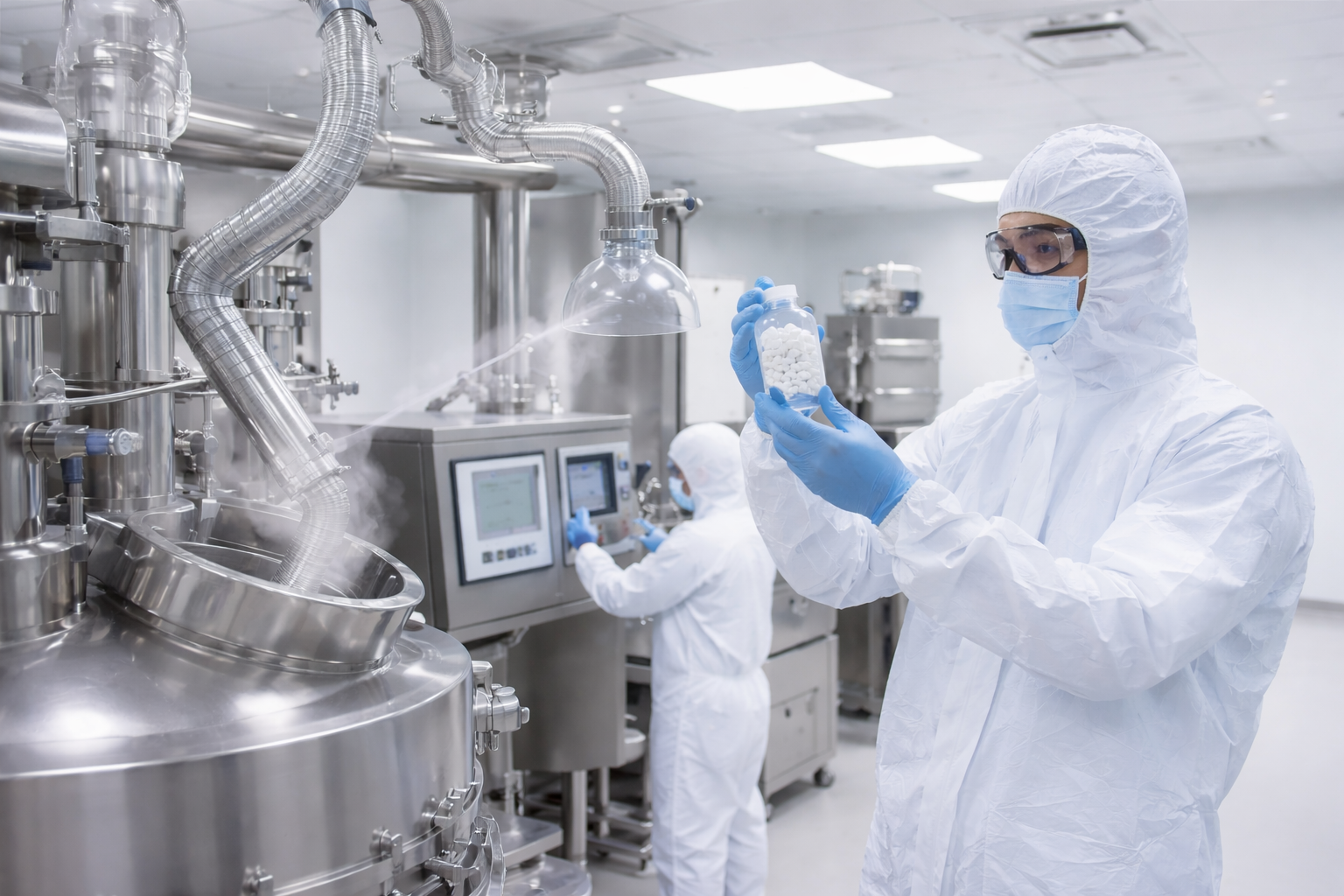
Pharmaceutical manufacturing operates under some of the strictest quality and regulatory standards. Even minor environmental deviations can compromise product integrity, making air quality control a critical aspect of operations.
One of the most overlooked risks in pharma facilities is airborne chemical vapors. Generated during mixing, granulation, coating, and solvent-based processes, these vapors can spread across production areas and interfere with controlled environments.
In an industry where precision and purity are non-negotiable, managing airborne vapors is essential to ensure compliance and consistent product quality.
The Real Impact of Airborne Chemical Vapors
Uncontrolled vapors can directly affect both product quality and operational reliability.
- Contamination of products during processing or packaging
- Variations in batch quality and consistency
- Increased rejection and rework
- Cross-contamination between production zones
- Non-compliance with regulatory standards
Over time, these issues can disrupt production and impact brand credibility.
Where This Problem Is Most Critical
The risk is highest in solvent-intensive and sensitive production environments.
Granulation, coating, API handling, and mixing processes generate vapors that must be tightly controlled. Cleanrooms, packaging areas, and storage zones are particularly vulnerable to contamination.
In such environments, even minimal vapor presence can compromise product purity and compliance.
Why Traditional Systems Fail
Standard ventilation systems are not designed for pharma-grade control.
- No source-level vapor capture
- Poor containment of airborne chemicals
- Ineffective filtration for vapors
- Inability to maintain controlled environments
This allows vapors to circulate and impact multiple production areas.
How Fume Control Systems Protect Product Integrity
Modern fume extraction systems are designed for precise control and compliance.
- Source-level extraction prevents vapor spread
- Advanced filtration (activated carbon, scrubbers) removes chemical vapors
- Controlled airflow maintains cleanroom conditions
- Emission control ensures regulatory compliance
- Risk-based design tailored to pharma processes
This ensures a stable and contamination-free production environment
What This Means for Your Business
Effective vapor control delivers critical operational benefits.
- Improved product quality and consistency
- Reduced batch rejection and rework
- Strong compliance with GMP and regulatory standards
- Better process reliability and efficiency
It directly supports both quality assurance and operational excellence.
Edynamics Approach: Pharma-Focused Air Control
Edynamics designs extraction systems aligned with pharmaceutical standards.
- Cleanroom-compatible system design
- Advanced vapor filtration technologies
- Compliance-driven engineering
- Customized solutions based on process requirements
This ensures controlled environments that support high-quality production.
Use Cases Across Pharma Manufacturing
Granulation units control solvent vapors during mixing.
Coating processes manage chemical emissions for uniform results.
API handling areas maintain controlled air environments.
Packaging zones prevent cross-contamination.
Don’t Ignore This Risk
Watch for:
- Strong solvent odors
- Batch inconsistencies
- Rising rejection rates
- Compliance challenges during audits
These are early indicators of poor vapor control.
Get a Pharma-Focused Extraction Assessment
In pharmaceutical manufacturing, product integrity depends on environmental control. Airborne chemical vapors, if unmanaged, can silently compromise quality and compliance.
Investing in effective fume control systems ensures clean, controlled environments that support consistent, high-quality production.