In industrial environments, not all risks are visible. While heat and noise are easy to detect, airborne contaminants such as gases, fumes, and pollutants often go unnoticed—yet they pose some of the most serious threats to workforce safety and operational continuity.
This challenge is particularly critical in industries like heavy fabrication, food processing, automotive manufacturing, and pharmaceutical production, where emissions are generated continuously as part of core processes.
Over time, unmanaged pollutants don’t just affect health—they begin to disrupt productivity, compromise compliance, and increase operational risk.
The Real Impact of Airborne Contaminants
When pollutants are not effectively managed, their impact extends far beyond air quality—they begin to influence every layer of operations, from workforce health to production stability.
- Workers are exposed to hazardous substances such as welding fumes, chemical vapors, and fine particulate matter, which can lead to both short-term discomfort and long-term health issues.
- Air quality deteriorates rapidly, especially in enclosed or high-density production environments, making it difficult to maintain safe working conditions.
- Productivity declines due to unsafe conditions, as workers slow down, fatigue faster, or require more breaks in contaminated environments.
- Compliance risks increase significantly, particularly in regulated industries where air quality standards must be strictly maintained.
- Operational disruptions and legal risks become inevitable, including audits, penalties, or even temporary shutdowns.
These effects are not isolated—they compound over time, creating a cycle of reduced efficiency, increased costs, and regulatory pressure.
👉 In high-emission environments, air quality is directly linked to both workforce performance and business continuity.
Where This Risk Is Most Critical
The severity of airborne contamination varies by industry, but its impact is especially pronounced in the following sectors:
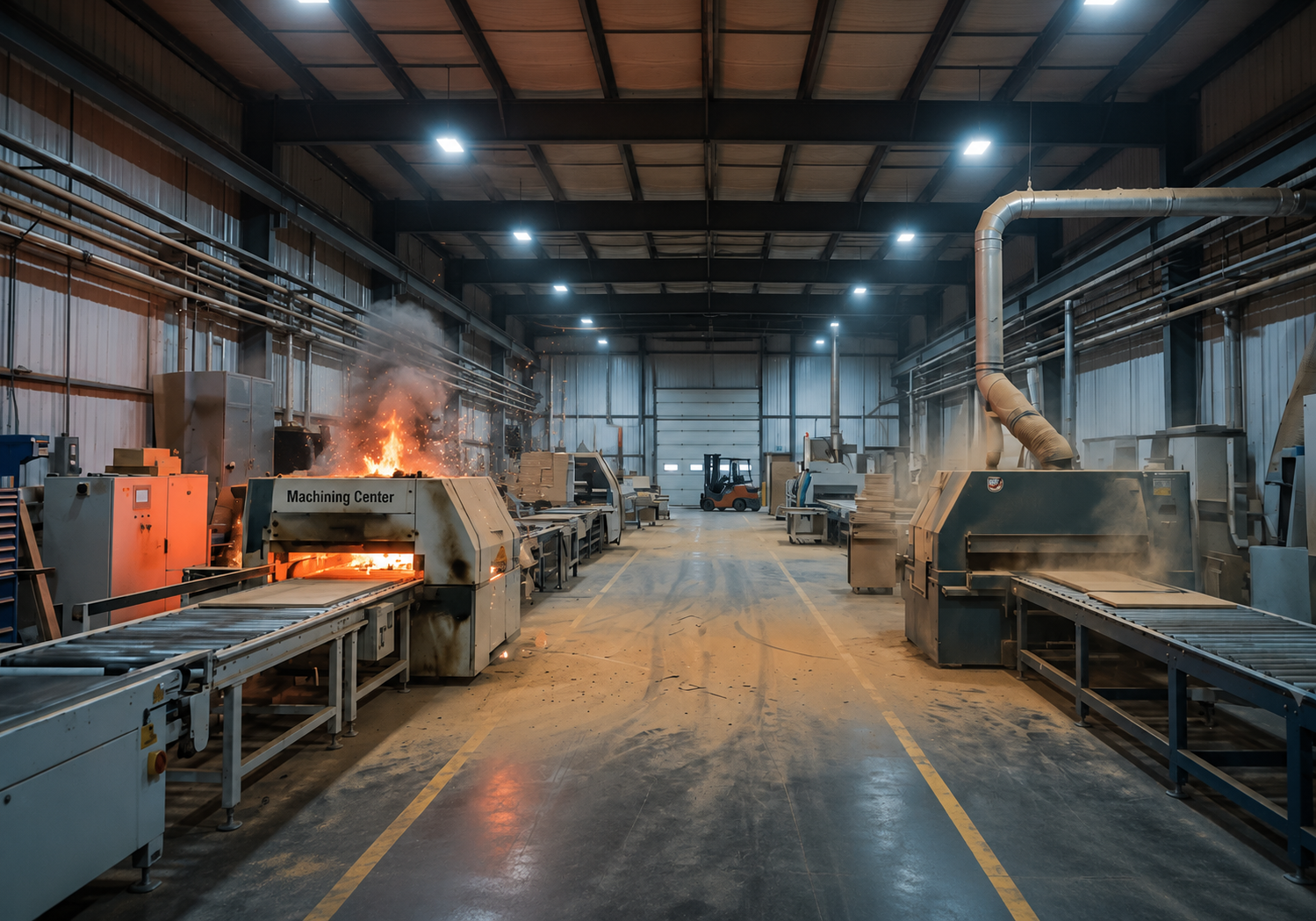
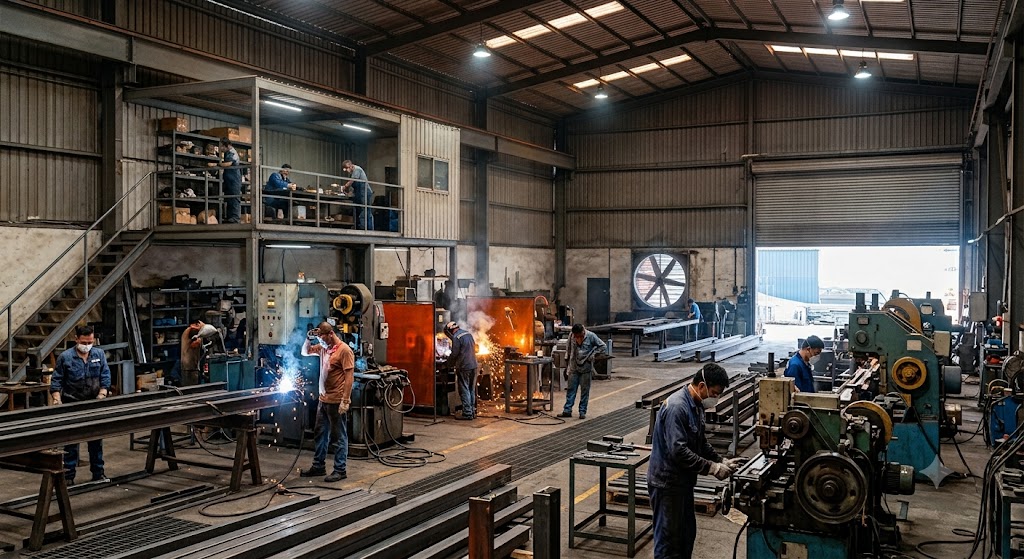
- In heavy fabrication facilities, welding, cutting, and grinding release dense fumes and metal particles that accumulate quickly without proper extraction.
- In food processing plants, steam, oil vapors, and combustion gases can affect both worker comfort and hygiene standards.
- In automotive manufacturing units, chemical emissions and process fumes create localized contamination zones that impact both safety and productivity.
- In pharmaceutical environments, even minor deviations in air quality can affect compliance, product integrity, and regulatory approvals.
Each of these industries operates under different conditions—but they all share one common requirement: controlled, clean, and well-managed airflow.
Why Traditional Exhaust Systems Fall Short
Many facilities still rely on conventional exhaust setups that are not designed to handle modern industrial challenges.
In most cases, these systems:
- Extract air without targeting the actual source of contamination
- Lack proper filtration mechanisms to remove harmful particles
- Fail to maintain consistent airflow across large production areas
- Operate independently of process-specific emission points
As a result, pollutants are often redistributed rather than removed—leading to persistent contamination across the facility.
The outcome is clear:
Even with exhaust systems in place, air quality remains compromised, and the risks continue to grow.
How Industrial Exhaust Systems Ensure Clean and Controlled Airflow
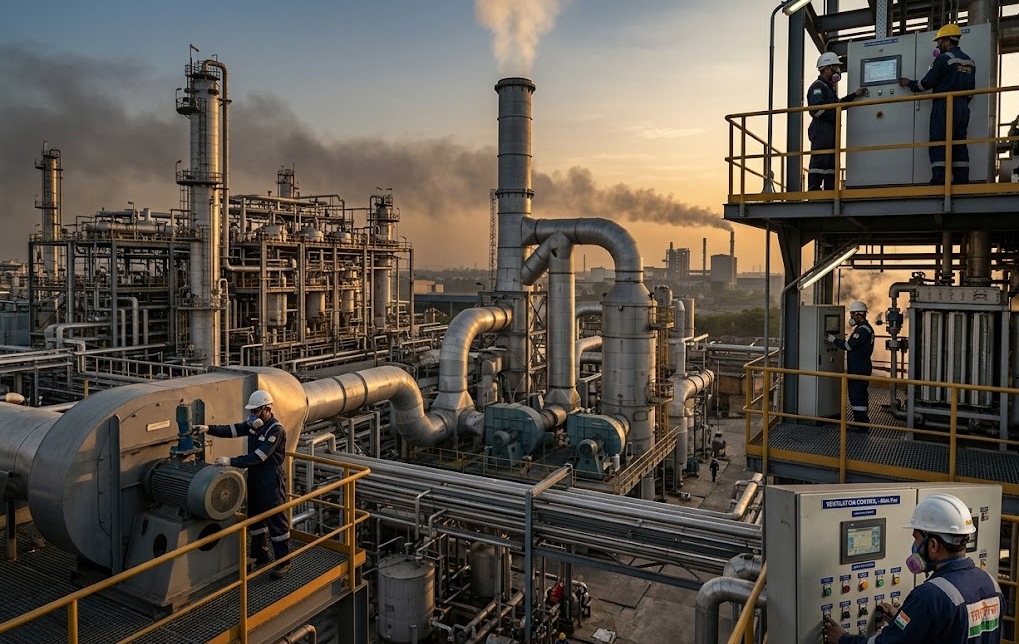
A well-engineered industrial exhaust system goes beyond basic air removal—it is designed to capture, filter, and eliminate pollutants at their source while maintaining a controlled airflow environment.
Such systems are built with a deep understanding of both process emissions and facility layout, ensuring that contaminants are managed effectively without impacting productivity.
Key capabilities include:
- Source-level extraction, which captures fumes and gases directly at the point of generation before they spread
- Advanced filtration systems, designed to remove fine particles, chemical vapors, and airborne contaminants
- Continuous air circulation and replacement, ensuring fresh air is consistently introduced into the environment
- Integration with industrial processes, allowing the system to adapt to emission-heavy operations
Together, these capabilities create a system that not only removes pollutants but also stabilizes the entire working environment.
What This Means for Your Business
When air quality is properly managed, the benefits extend across multiple dimensions of your operations:
- Worker safety improves significantly, reducing health-related risks and absenteeism
- Compliance becomes easier to maintain, especially in regulated industries
- Productivity increases as working conditions become safer and more comfortable
- Operational risks are minimized, reducing the likelihood of disruptions or penalties
- Long-term costs decrease due to fewer health, legal, and maintenance issues
In essence, clean air is not just a safety measure—it becomes a strategic advantage for operational efficiency.
Edynamics Approach: Clean Air Engineered for Industrial Reality
At Edynamics, we design industrial exhaust and pollution control systems that are tailored to the specific emission characteristics of your facility.
Our approach is built around:
- Understanding your process-level emission sources
- Designing extraction systems that target pollutants at origin
- Ensuring compliance with industry-specific standards
- Delivering long-term, energy-efficient solutions
We focus on industries where air quality is critical, including:
- Heavy Fabrication & Engineering
- Food Processing & Manufacturing
- Automotive & Auto Components
- Pharmaceutical & Clean Manufacturing
Every solution is engineered to ensure that your facility operates with clean air, controlled environments, and reduced risk.
Use Cases Across Priority Industries
In a heavy fabrication facility, implementing source-level fume extraction significantly reduced airborne metal particles, improving both worker safety and visibility on the shop floor.
In a food processing plant, controlled exhaust systems helped manage steam and vapors, ensuring better hygiene conditions and consistent production output.
In an automotive manufacturing unit, targeted exhaust solutions removed chemical fumes from process areas, creating a safer and more stable working environment.
In a pharmaceutical facility, advanced filtration systems ensured compliance with strict air quality standards, supporting both product integrity and regulatory requirements.
Don’t Ignore Invisible Risks
If your facility is experiencing:
- Poor or inconsistent air quality
- Worker discomfort or health concerns
- Increasing compliance pressure
- Frequent inspections or audit challenges
👉 Then your current ventilation system may not be addressing the real problem.
Airborne contaminants may be invisible—but their impact is not.
Get a Customized Pollution Control Strategy
In manufacturing, what you can’t see can hurt you the most.
By investing in the right industrial exhaust system, you’re not just improving air quality—you’re building a safer, more efficient, and future-ready operation.