Air movement plays a fundamental role in industrial operations, yet it is often overlooked until performance issues begin to surface. From ventilation and cooling to dust and fume extraction, the efficiency of airflow directly influences productivity, safety, and compliance.
In industries such as heavy fabrication, automotive manufacturing, food processing, pharmaceuticals, and chemical processing, consistent and controlled airflow is essential. However, many facilities struggle with uneven airflow, pressure imbalances, and inefficient systems that fail to meet operational demands.
The Real Impact of Inefficient Air Movement
Poor airflow management can create widespread operational challenges that affect both processes and people.
Inadequate air movement leads to the accumulation of dust, fumes, and heat, which can disrupt production and compromise worker safety. In fabrication and automotive plants, this results in poor visibility and reduced efficiency. In food and pharmaceutical industries, it can impact product quality and hygiene.
Equipment performance is also affected. Insufficient cooling and ventilation can cause overheating, leading to frequent breakdowns and increased maintenance costs.
Key impacts include:
- Accumulation of dust, fumes, and heat
- Reduced worker productivity and safety
- Equipment overheating and downtime
- Inconsistent product quality
- Increased operational and energy costs
These issues highlight the importance of efficient airflow systems in maintaining stable operations.
Where This Problem Is Most Critical
Airflow challenges are particularly significant in industries with high heat loads, emissions, or strict environmental control requirements.
Heavy fabrication and engineering units generate dust and heat that require continuous airflow management. Automotive plants depend on controlled air movement for painting, coating, and machining processes.
In food processing and pharmaceutical manufacturing, airflow must be carefully controlled to maintain hygiene and prevent contamination. Chemical processing, petrochemical plants, and oil & gas facilities require precise air handling to manage hazardous emissions.
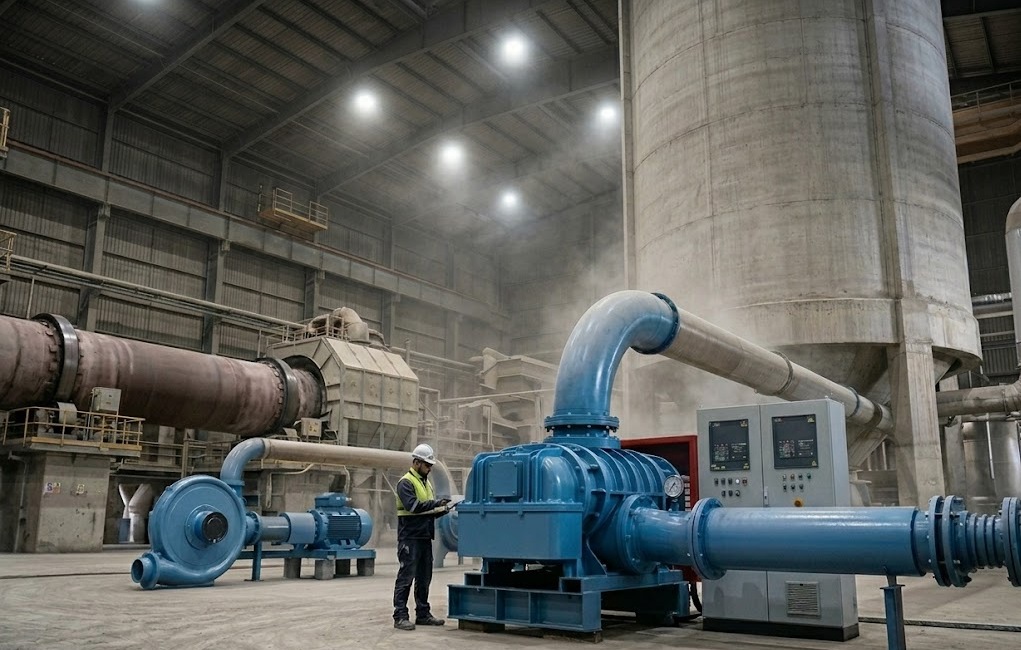
Across these industries, industrial blowers play a vital role in ensuring consistent airflow and operational efficiency.
Why Traditional / Outdated Systems Fail
Many facilities rely on outdated or improperly selected blowers that are not designed for current operational demands.
These systems often lack efficiency and fail to deliver consistent airflow across the facility. In many cases, blowers are oversized or undersized, leading to energy waste and poor performance.
Common limitations include:
- Inefficient airflow delivery
- Poor pressure management
- High energy consumption
- Inconsistent performance across different zones
- Lack of integration with modern systems
As a result, airflow remains uneven, affecting overall plant performance.
How Industrial Blowers Improve Airflow Efficiency
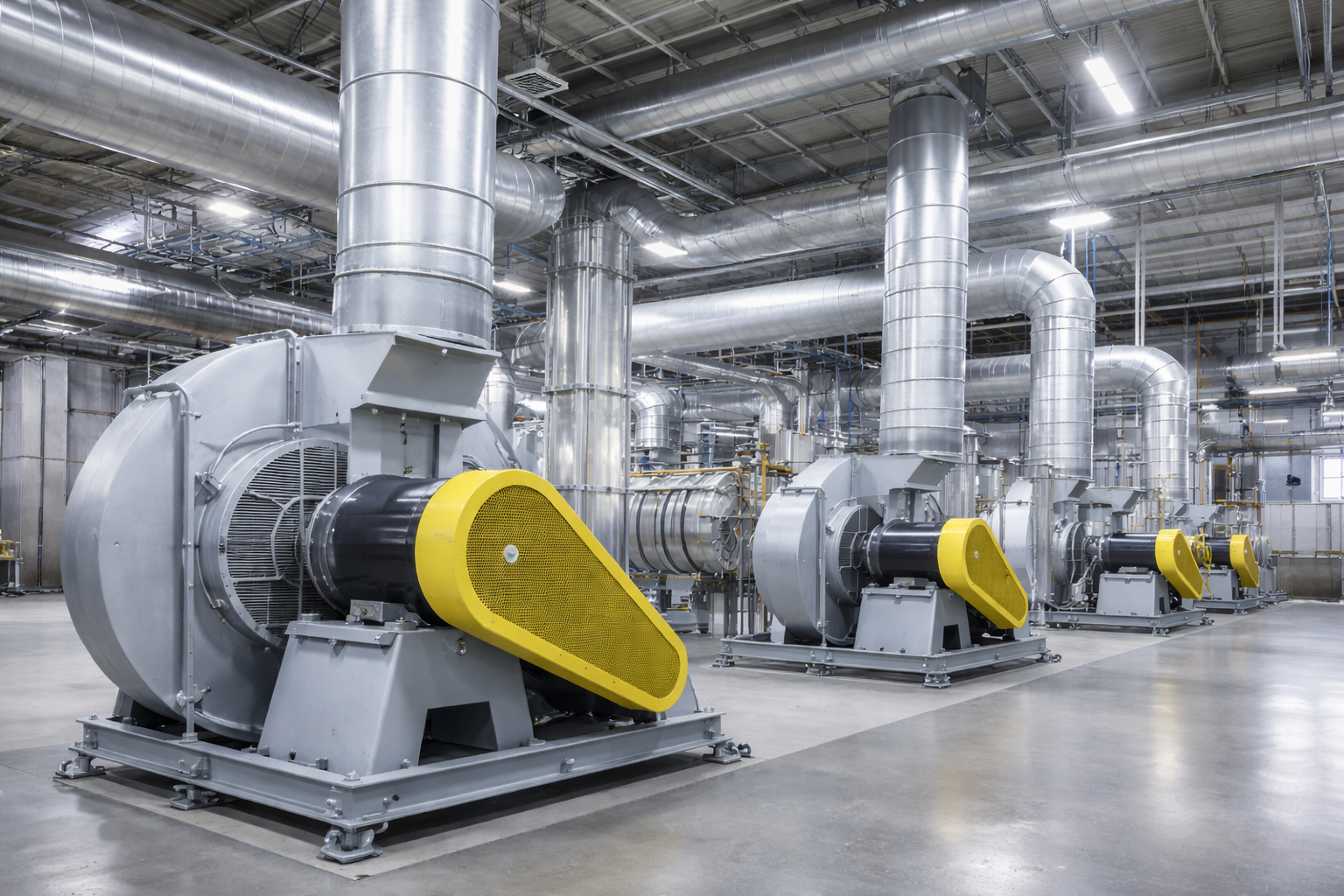
Modern industrial blowers are engineered to deliver precise and consistent airflow tailored to specific applications.
They are designed to handle varying pressure and volume requirements, ensuring effective air movement across different processes. In dust and fume extraction systems, blowers create the necessary suction to capture contaminants at the source.
Blowers are also critical for ventilation and cooling. They help regulate temperature, remove heat, and maintain comfortable working conditions. In controlled environments such as pharma and food industries, they support airflow patterns required for hygiene and compliance.
Key features include:
- Optimized airflow and pressure control
- Energy-efficient designs for reduced power consumption
- Integration with extraction and ventilation systems
- Customization based on plant layout and process needs
This ensures reliable and efficient air movement across the facility.
What This Means for Your Business
Financially, energy-efficient blowers help reduce power consumption and maintenance costs, delivering long-term savings.
Key benefits include:
- Improved operational efficiency
- Enhanced worker safety and comfort
- Reduced downtime and maintenance costs
- Lower energy consumption
- Better compliance with environmental standards
Edynamics Approach: Engineered Airflow Solutions
At Edynamics, industrial blowers are not treated as standalone components but as part of an integrated airflow solution.
Each system is designed based on a detailed analysis of process requirements, plant layout, and airflow dynamics. Whether it is a dust extraction system, ventilation setup, or cooling application, blowers are selected and configured for optimal performance.
The approach focuses on:
- Application-specific blower selection
- Energy-efficient system design
- Seamless integration with extraction and ventilation systems
- Reliable and scalable solutions
This ensures consistent airflow and improved operational performance.
Use Cases Across Industries
In fabrication units, blowers support dust extraction and improve visibility.
In automotive plants, they ensure controlled airflow for painting and machining.
In pharmaceutical facilities, they maintain cleanroom air circulation.
In food processing units, they support hygiene and ventilation.
In chemical plants, they manage airflow for safe emission control.
Don’t Ignore This Risk
Airflow inefficiencies often go unnoticed until they impact operations.
Common warning signs include:
- Uneven airflow across the facility
- Persistent heat buildup
- Dust and fumes not being effectively removed
- High energy consumption
Ignoring these issues can lead to reduced efficiency and increased costs.
Optimize Your Airflow for Better Performance
Air movement is a critical factor in industrial performance. Inefficient airflow can quietly impact productivity, safety, and costs.
Investing in the right industrial blower systems ensures consistent airflow, improved efficiency, and reliable operations.
In modern manufacturing, airflow is not just a support function—it is a key driver of performance.