On a busy shop floor, clear visibility is essential for safety, coordination, and productivity—but dust and fumes often reduce it.
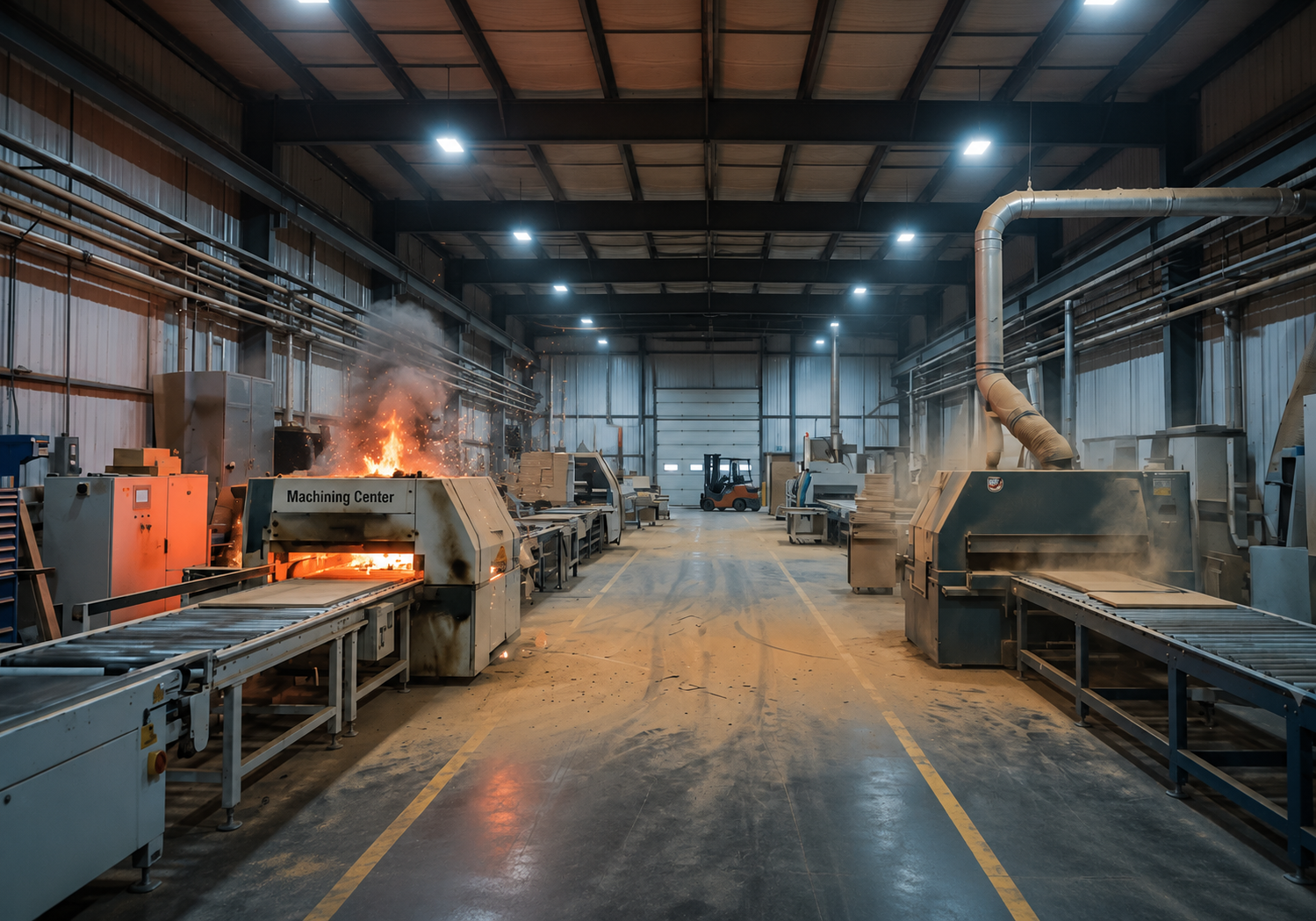
Across industries, processes like cutting, grinding, machining, and powder handling release airborne particles that spread across work areas. In high-risk sectors, these emissions can also be hazardous or combustible.
Though often ignored, poor visibility increases safety risks, inefficiencies, and compliance issues—making it a critical concern for modern operations.
The Real Impact of Poor Visibility in Dust-Prone Environments
Reduced visibility from dust and fumes directly impacts safety and efficiency.
- Low visibility increases accidents, collisions, and operational errors.
- Workers struggle to operate machinery and navigate safely.
- In heavy industries, even slight visibility loss can cause serious incidents.
- In chemical environments, it can delay critical response times.
- Slows down tasks and reduces overall productivity.
- Increases worker fatigue due to constant strain.
Overall, poor visibility leads to higher risks and lower efficiency.
Key impacts include:
- Increased risk of workplace accidents and injuries
- Reduced operational efficiency due to slower task execution
- Worker fatigue and decreased concentration
- Higher likelihood of errors in precision-based tasks
- Compliance risks related to workplace safety standards
These challenges compound over time. What begins as reduced visibility can escalate into safety incidents, production delays, and increased operational costs.
Where This Problem Is Most Critical
Poor visibility has the greatest impact in industries involving continuous movement, precision work, or hazardous materials.
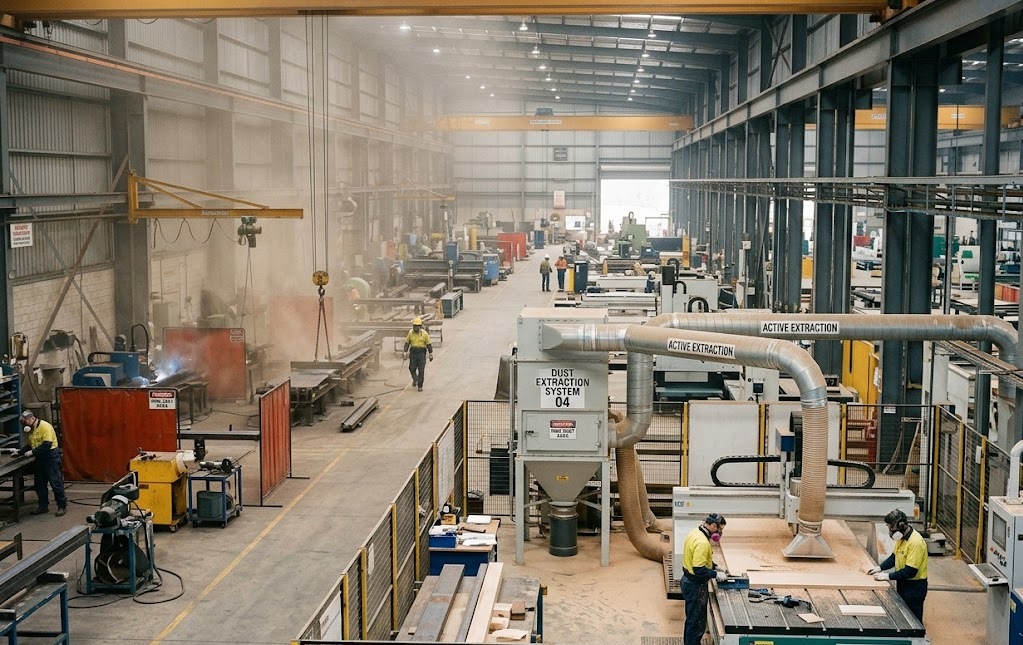
- Heavy fabrication and engineering face dense dust from grinding and welding.
- Automotive industries struggle with reduced visibility in machining and finishing areas.
- Food and pharmaceutical sectors risk both visibility issues and contamination.
- Chemical, petrochemical, oil & gas, and rubber industries deal with hazardous, obstructive emissions.
- Poor visibility can delay hazard detection and response.
Maintaining clear visibility is essential for safe and efficient operations.
Why Traditional / Outdated Systems Fail
Many facilities rely on general ventilation systems that are not designed to address localized dust generation. These systems attempt to circulate or dilute contaminated air rather than eliminate the source of the problem.
In real-world conditions, dust spreads rapidly across the workspace before being extracted. This results in persistent haze and uneven air quality across different areas of the facility.
Common limitations include:
- Lack of source-level extraction, allowing dust to spread
- Inefficient airflow design leading to localized visibility issues
- Inability to capture fine airborne particles
- High energy consumption with inconsistent results
- Failure to meet modern safety and compliance standards
As a result, traditional systems fail to maintain consistent visibility, especially in high-intensity production environments.
How Dust & Fume Extraction Systems Improve Visibility and Safety
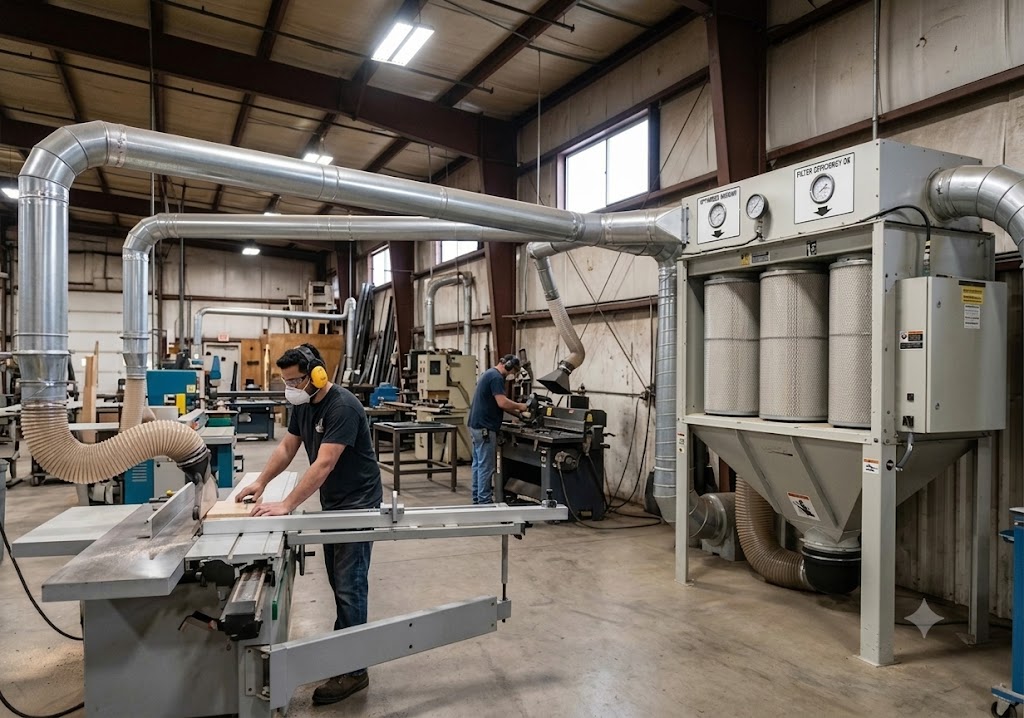
Modern dust and fume extraction systems control contaminants at the source, preventing buildup and improving visibility.
- Source-level extraction captures dust and fumes instantly, stopping dispersion.
- Multi-stage filtration removes particles of varying sizes.
- Systems may include cyclones, cartridge filters, bag filters, or wet scrubbers.
- Collected dust is safely removed, preventing re-entry into the workspace.
- Safety features like explosion-proof components and spark arrestors are used in high-risk industries.
- Risk-based design ensures systems match plant layout, processes, and regulations.
This approach ensures clear air, improving safety and operational efficiency.
What This Means for Your Business
Improving visibility through dust control directly boosts business performance.
- Enhances safety by reducing accidents and improving response times.
- Increases efficiency by enabling faster, more accurate work.
- Reduces errors in precision-driven operations.
- Supports compliance with workplace safety regulations.
Overall, it improves safety, productivity, and regulatory compliance.
Financially, the benefits include:
- Reduced accident-related costs and downtime
- Improved workforce productivity
- Lower risk of regulatory penalties
- Enhanced operational efficiency
Ultimately, maintaining clear visibility contributes to safer, faster, and more reliable operations.
Edynamics Approach: Engineering for Safety and Operational Clarity
At Edynamics, dust and fume extraction is approached as a critical factor in ensuring workplace safety and operational efficiency.
Each solution is designed based on a detailed assessment of the facility layout, processes, and risk factors. Whether it is a fabrication unit, an automotive plant, or a chemical processing facility, systems are tailored to address specific challenges.
The focus is on:
- Improving visibility through targeted source-level extraction
- Designing systems aligned with safety and compliance requirements
- Customizing solutions based on operational needs
- Delivering end-to-end systems including extraction, filtration, and disposal
This ensures that clients achieve not only cleaner air but also safer and more efficient working environments.
Use Cases Across Industries
In a heavy fabrication unit, localized extraction systems capture grinding dust, improving visibility and reducing accident risks.
In automotive plants, dust control systems maintain clear machining environments, enhancing precision and safety.
In pharmaceutical facilities, controlled airflow ensures both visibility and compliance with hygiene standards.
In food processing units, extraction systems maintain clean and safe working conditions.
In chemical plants, advanced systems manage hazardous emissions, ensuring safe and visible operations.
Don’t Ignore This Risk
Poor visibility is often treated as a minor inconvenience, but it is a leading indicator of deeper operational issues.
Common warning signs include:
- Persistent haze or dust clouds in work areas
- Difficulty in maintaining clear sightlines
- Increased near-miss incidents or safety concerns
- Worker complaints about visibility and air quality
Ignoring these signs can lead to serious safety incidents and operational disruptions.
Take the Next Step Toward Safer, Clearer Operations
If your facility is facing challenges related to dust and visibility, now is the time to act.
Get expert insights tailored to your operations.
In industrial environments, what you cannot see can hurt you. Poor visibility caused by airborne dust and fumes is a hidden risk that affects safety, efficiency, and compliance.
By investing in effective dust and fume extraction systems, businesses can create clear, controlled environments that support safe and productive operations.
In today’s manufacturing landscape, visibility is not just about clarity—it is about control, safety, and performance.