The Hidden Cost of Ignoring Dust Collection
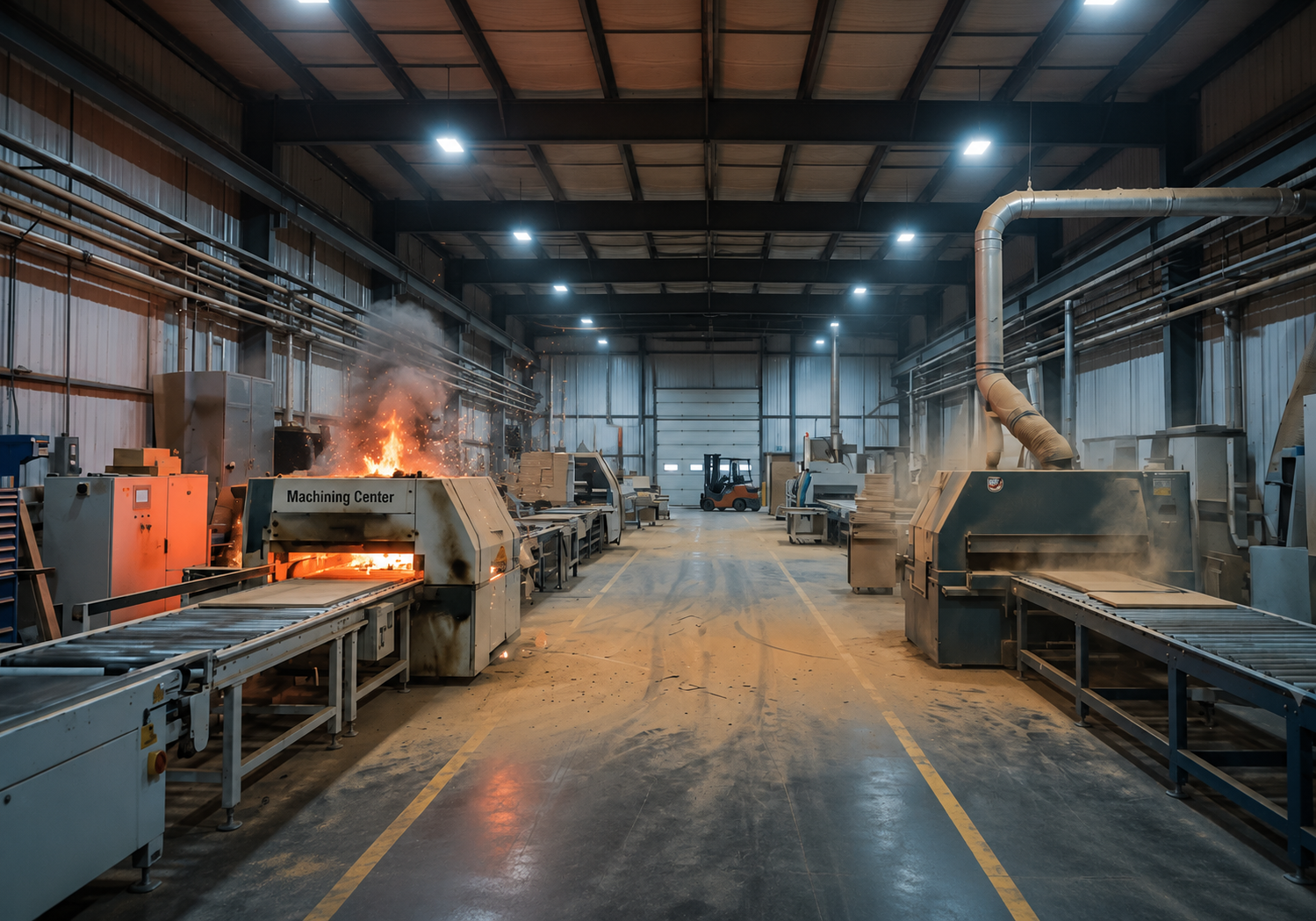
A medium-sized metal fabrication plant struggled with recurring issues:
- Dust settling on finished products
- Frequent filter clogging
- Employees complaining about poor visibility near grinding stations
- Unexpected production stoppages due to equipment maintenance
Initially, the company considered purchasing a larger dust collector.
However, after evaluating the system, engineers discovered the actual problems:
- Poor hood placement
- Air leaks at duct joints
- Inconsistent filter maintenance
Instead of replacing the entire system, they optimized airflow, improved hood design, sealed duct leaks, and implemented preventive maintenance.
The Result
✅ Better dust capture at the source
✅ Cleaner work environment
✅ Reduced maintenance interruptions
✅ Improved operator comfort
Lesson: Bigger equipment isn’t always the answer. Better system design often delivers greater results.
5 Dust Collection Lessons Every Plant Should Know
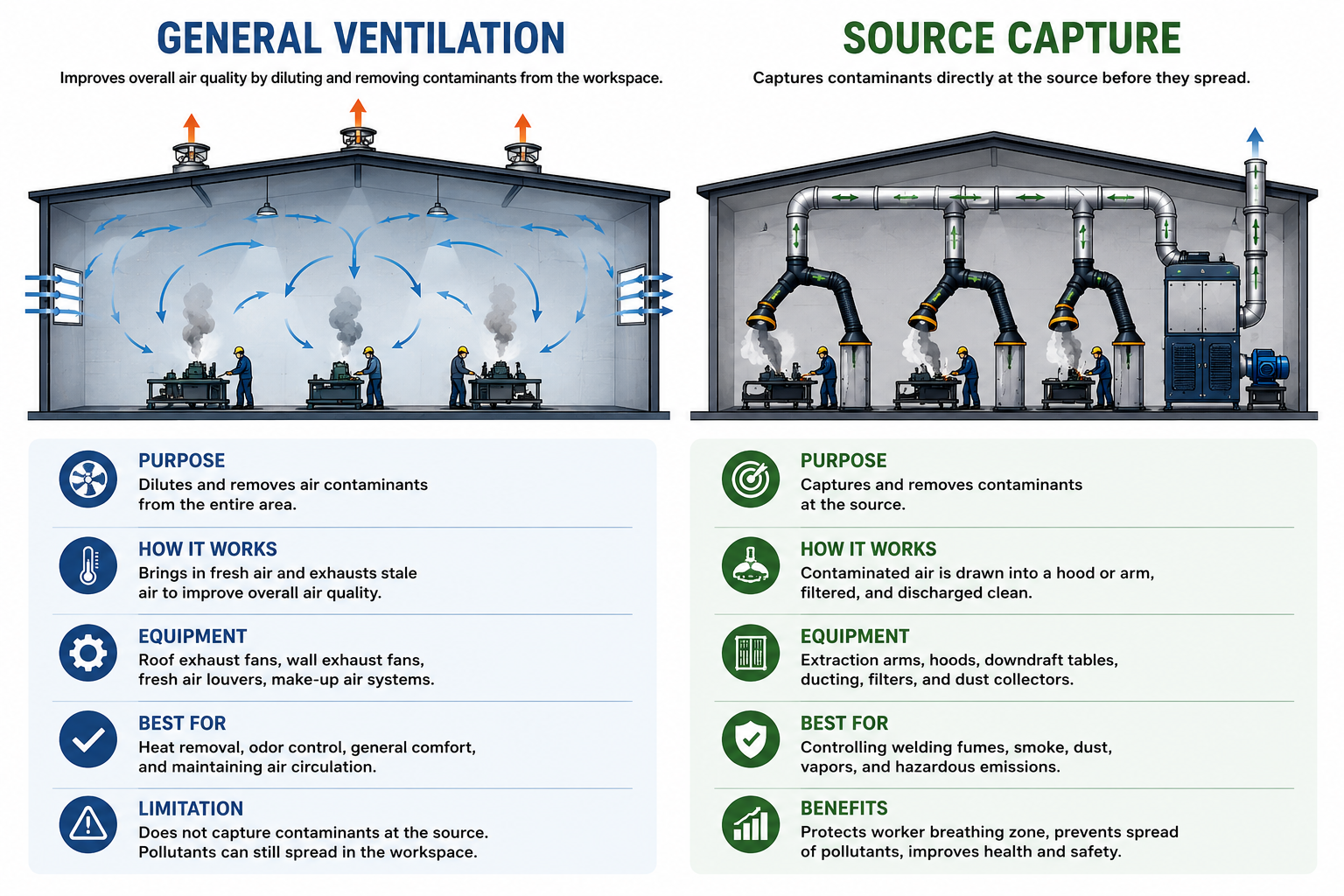
1. Capture Dust at the Source
The farther dust travels, the harder it becomes to collect. Well-designed hoods capture contaminants before they spread.
2. Bigger Isn’t Always Better
Oversized systems waste energy, while undersized systems fail to maintain adequate airflow. Proper sizing is key.
3. Dirty Filters Increase Operating Costs
As filters clog, airflow decreases and fan motors work harder, increasing energy consumption and reducing collection efficiency.
4. Airflow Matters More Than Fan Size
A powerful fan cannot compensate for poorly designed ductwork, excessive bends, or air leaks.
5. Maintenance Is Part of Performance
Regular inspections, filter replacement, and leak checks keep the system operating efficiently and extend equipment life.
Did You Know?
A dust collection system spends over 90% of its life operating under partial load conditions.
That’s why efficient airflow design and regular maintenance often have a greater impact on performance than simply increasing motor size.
Engineering Insight
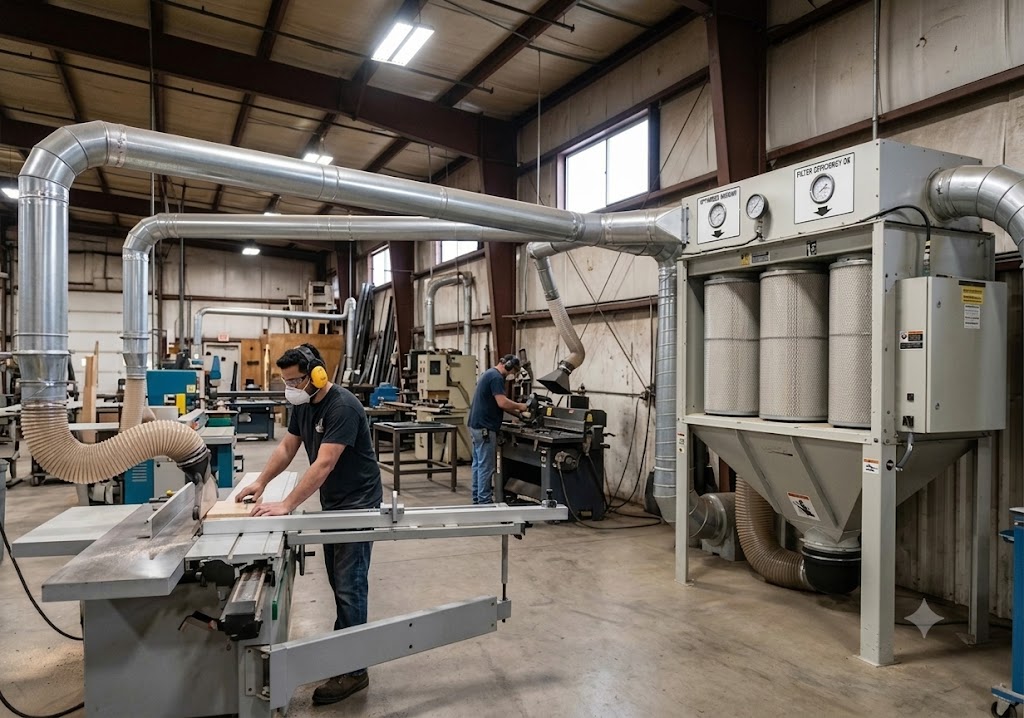
An effective dust collection system is more than a collector.
It is a combination of:
- Proper hood design
- Correct duct sizing
- Balanced airflow
- Efficient filtration
- Reliable fan performance
- Preventive maintenance
Weakness in any one of these areas can reduce the effectiveness of the entire system.
Is your dust collection system delivering peak performance—or simply running?
At eDynamics, we help manufacturers optimize dust collection systems through engineered airflow design, system audits, performance evaluations, and customized solutions. Whether you’re planning a new installation or improving an existing setup, our team can help you achieve cleaner air, lower operating costs, and more reliable production.