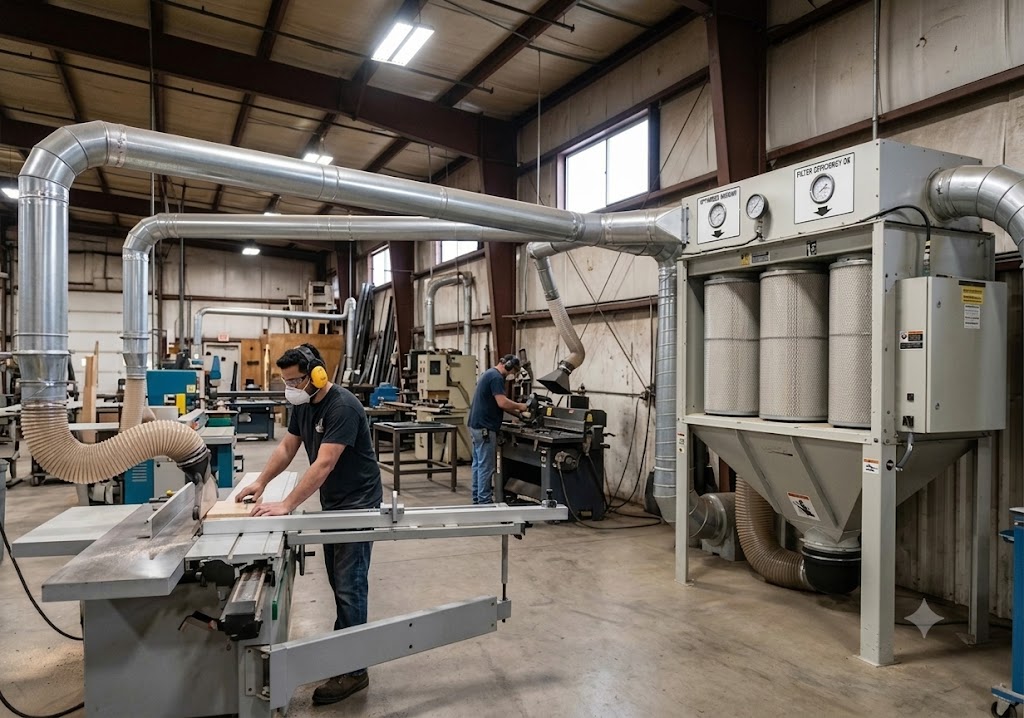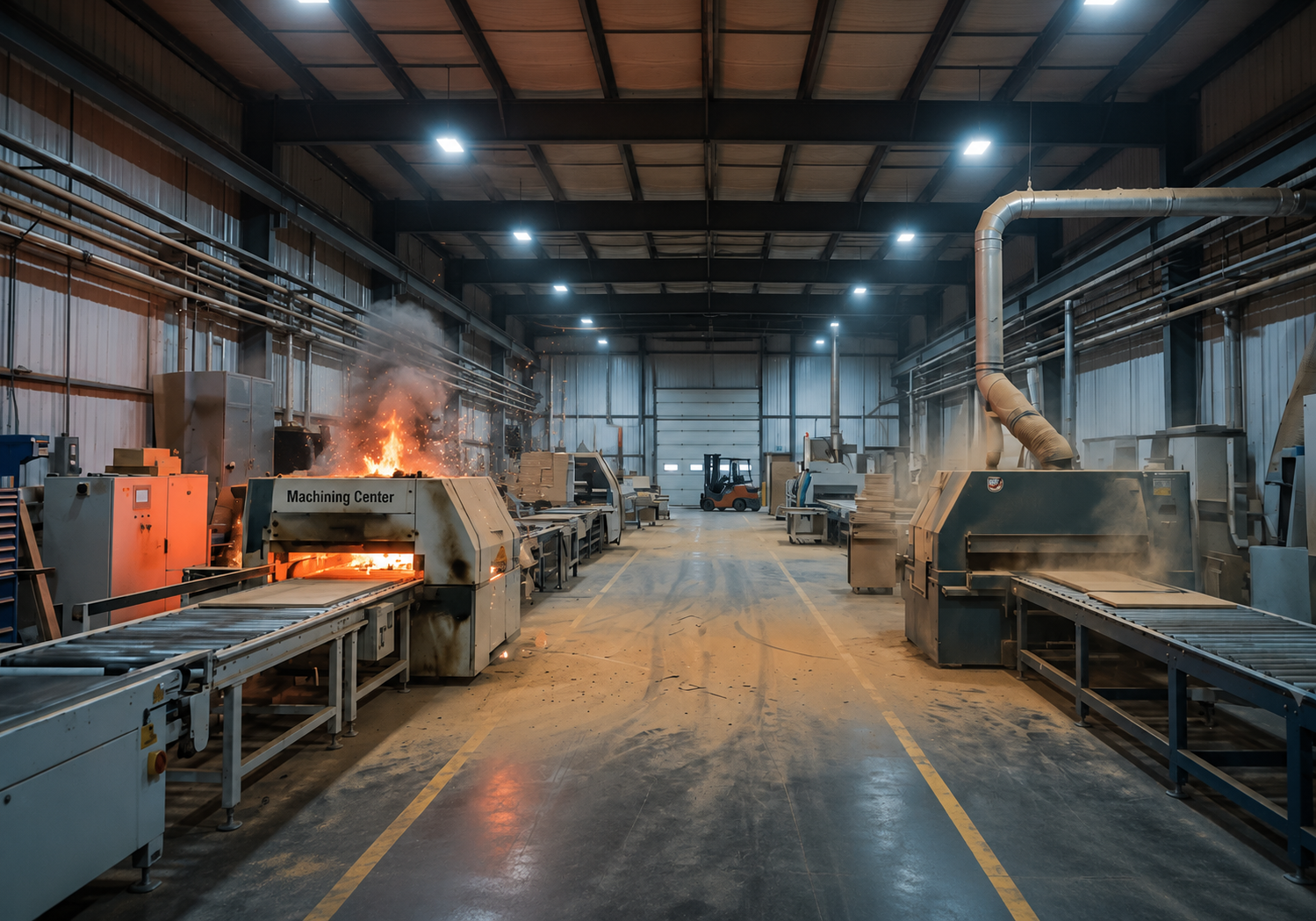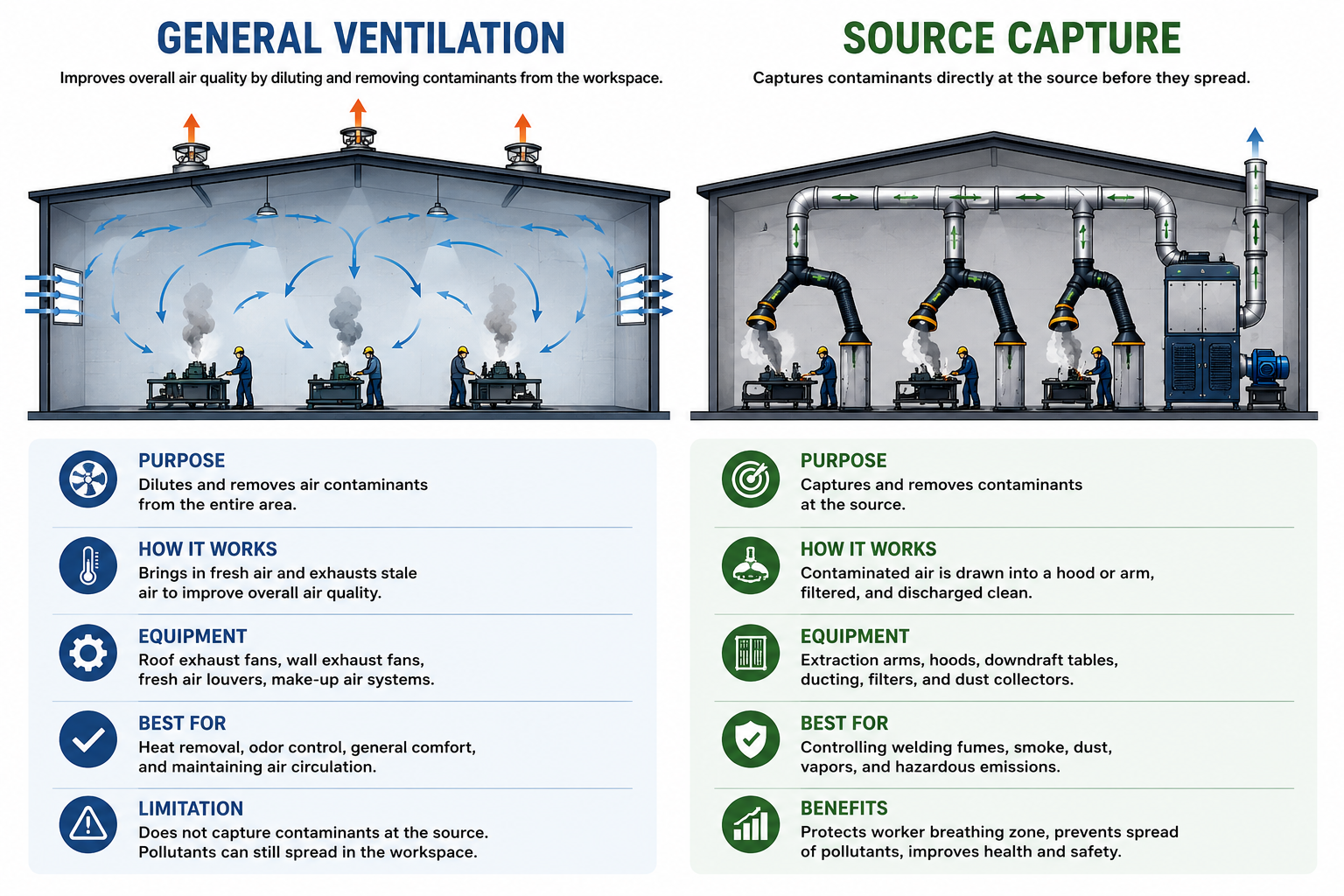
When industrial fumes become a concern, many facilities take the same approach: install more wall-mounted fans, add exhaust fans, or increase general ventilation.
While these measures may improve air movement, they often fail to address the actual problem.
The reality is simple:
Ventilation moves air. Fume extraction removes contaminants.
In welding shops, fabrication units, paint booths, foundries, chemical processing plants, and manufacturing facilities, relying solely on general ventilation can leave workers exposed to harmful fumes despite noticeable airflow.
Understanding the difference between source capture and general ventilation is critical for maintaining worker safety, regulatory compliance, and operational efficiency.
Understanding Industrial Fumes
Industrial fumes are generated when materials are:
- Welded
- Cut
- Soldered
- Melted
- Heated
- Painted
- Chemically processed
Unlike larger dust particles, fumes are extremely fine and can remain suspended in the air for extended periods.
Common examples include:
Welding Fumes
Generated during MIG, TIG, and Arc welding.
Plasma & Laser Cutting Fumes
Produced when metal is vaporized.
Paint and Solvent Vapors
Released during coating and drying processes.
Foundry Fumes
Generated during melting and casting operations.
Chemical Process Vapors
Produced during mixing, storage, and manufacturing operations.
What is General Ventilation?
General ventilation is designed to improve overall airflow within a building.
Typical systems include:
- Roof exhaust ventilators
- Industrial exhaust fans
- Fresh air louvers
- Air circulation fans
- Roof extractors
Purpose
General ventilation helps:
✓ Remove excess heat
✓ Reduce humidity
✓ Introduce fresh air
✓ Improve worker comfort
✓ Prevent stagnant air
The Limitation of General Ventilation
Imagine a welding operator producing fumes directly in his breathing zone.
Even if the facility has excellent airflow:
- The fumes are still generated near the worker.
- The worker inhales contaminants before ventilation can remove them.
- Air movement may actually spread fumes to nearby workers.
General ventilation dilutes contaminants.
It does not capture them at the source.
What is Source Capture?
Source capture removes contaminants directly where they are generated.
The objective is simple:
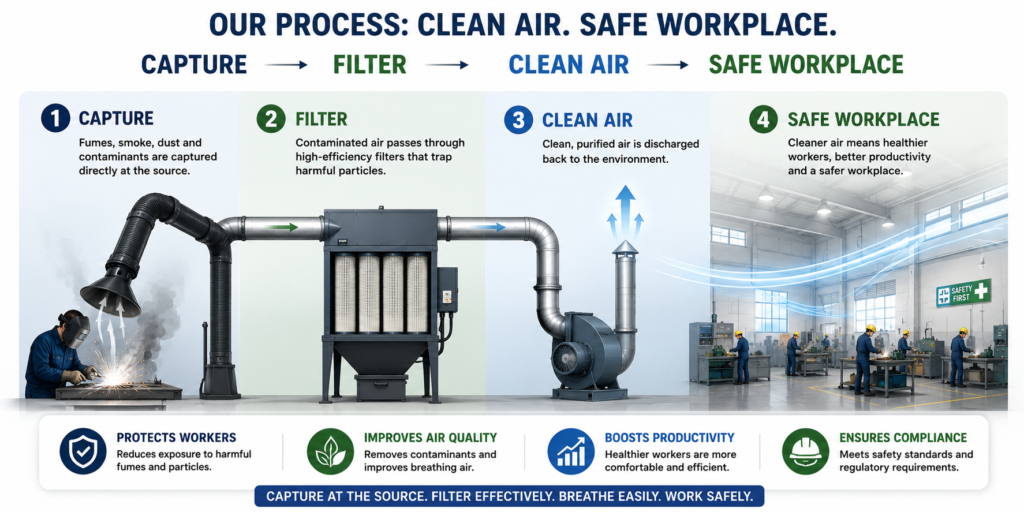
Capture → Contain → Filter → Discharge
before fumes reach the worker’s breathing zone.
Why Source Capture Is More Effective
Consider welding fumes.
General Ventilation Approach
- Fumes generated
- Worker exposed
- Fumes disperse through facility
- Exhaust fans remove some contaminants
Result:
Worker exposure still occurs.
Source Capture Approach
- Fumes generated
- Extraction hood captures fumes immediately
- Filtration system removes contaminants
- Clean air is discharged
Result:
Minimal worker exposure
Common Source Capture Solutions
Extraction Arms
Ideal for:
- Welding stations
- Grinding operations
- Soldering processes
Advantages:
✓ Flexible positioning
✓ Captures contaminants close to source
✓ Cost-effective solution
Canopy Hoods
Suitable for:
- Furnaces
- Melting operations
- Heat treatment processes
Advantages:
✓ Effective for rising thermal plumes
✓ Large capture area
Downdraft Tables
Common in:
- Grinding
- Deburring
- Polishing
Advantages:
✓ Pulls contaminants away from breathing zone
✓ Cleaner workstation
Enclosed Extraction Systems
Used for:
- Laser cutting
- Plasma cutting
- Chemical operations
Advantages:
✓ Maximum containment
✓ High capture efficiency
When General Ventilation Is Still Necessary
A common misconception is that source capture eliminates the need for ventilation.
In reality, both systems serve different purposes.
Function | General Ventilation | Source Capture |
Heat Removal | ✓ | ✗ |
Fresh Air Supply | ✓ | ✗ |
Air Circulation | ✓ | ✗ |
Worker Comfort | ✓ | Partial |
Fume Removal | Limited | ✓ |
Dust/Fume Control | Limited | ✓ |
The best-performing facilities use both systems together.
The eDynamics Approach
At eDynamics, we believe industrial air quality solutions must address both worker comfort and contaminant control.
Our process begins with understanding:
- Fume generation points
- Process characteristics
- Worker exposure zones
- Existing airflow patterns
- Regulatory requirements
Step 1: Site Assessment
We evaluate:
- Process equipment
- Airflow behavior
- Contaminant generation rates
- Worker locations
Step 2: Source Capture Design
Depending on the process, solutions may include:
- Extraction arms
- Canopy hoods
- Slot hoods
- Downdraft systems
- Custom extraction enclosures
Step 3: Filtration Selection
Systems may incorporate:
- Cartridge filters
- Bag filters
- Cyclones
- Wet scrubbers
- Multi-stage filtration units
Step 4: Ventilation Integration
Source capture is combined with:
- Fresh air systems
- Roof ventilation
- General exhaust systems
for complete workplace air quality management.
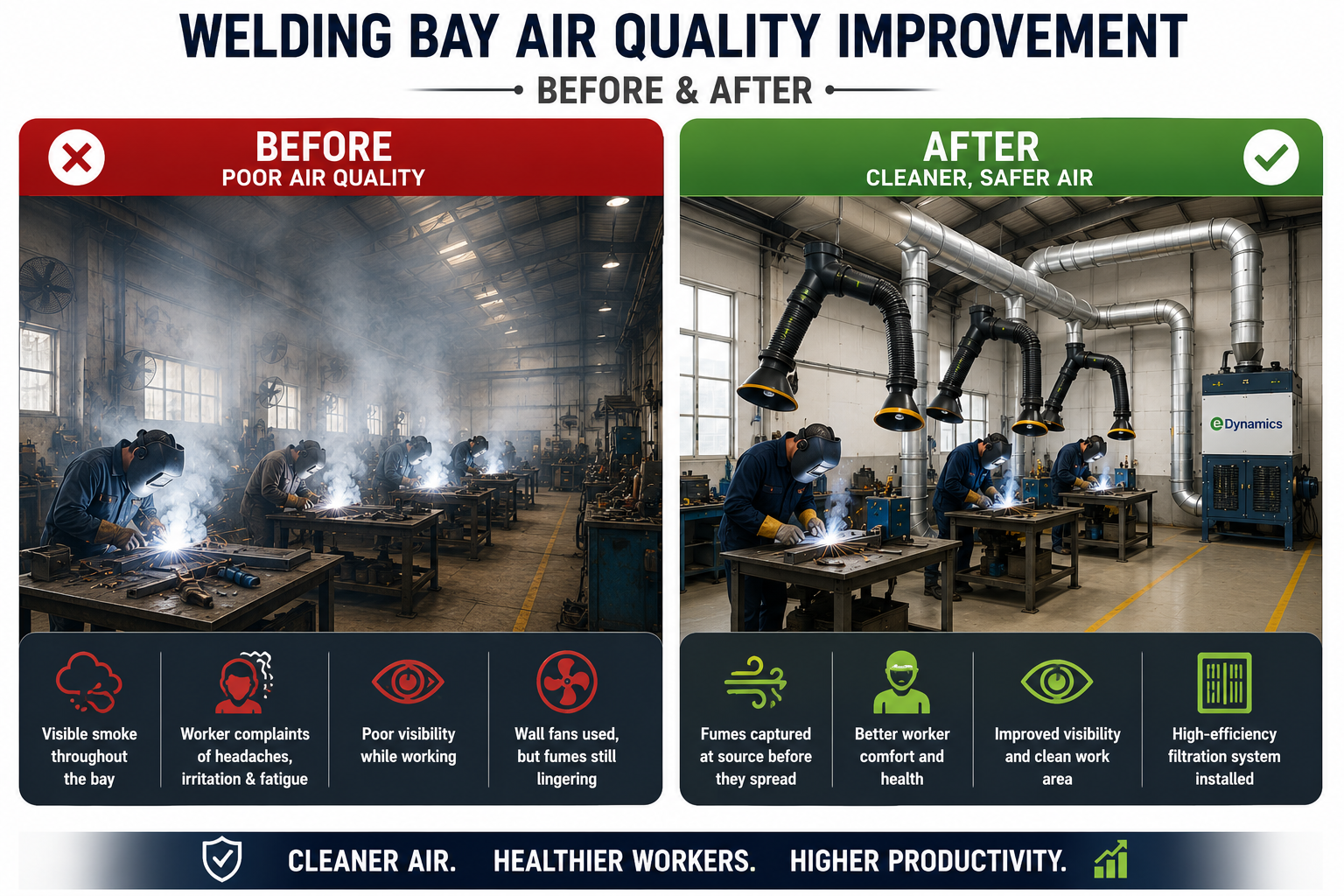
Case Study: Welding Fabrication Facility
Challenge
A heavy fabrication unit experienced:
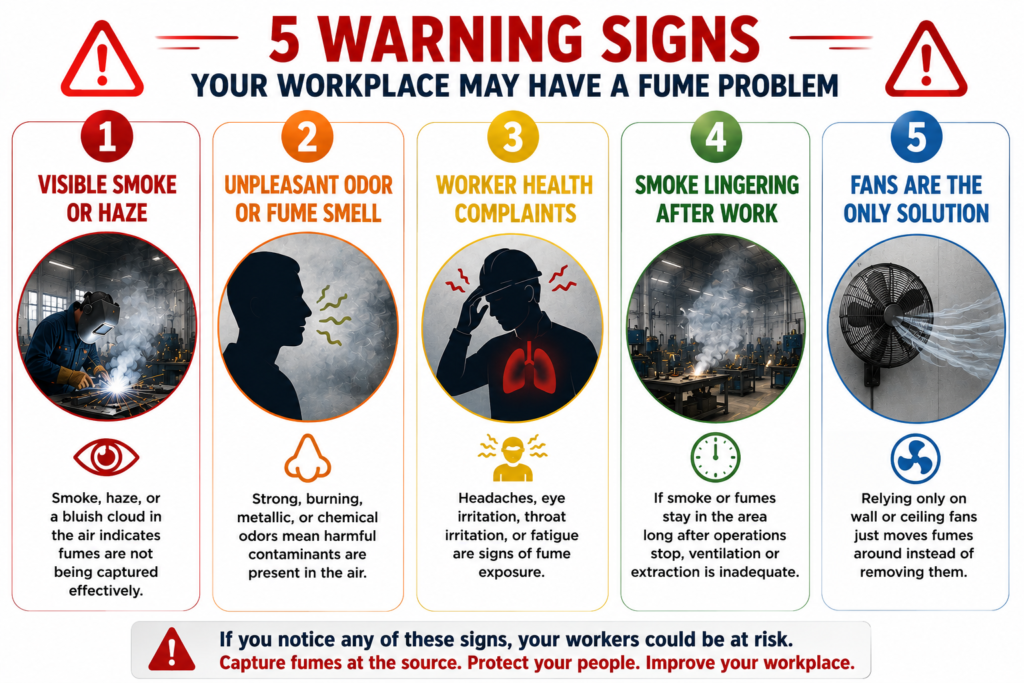
- Visible welding fumes
- Worker complaints
- Poor visibility near welding bays
Although multiple wall-mounted fans were installed, fumes remained a persistent issue.
Root Cause
The facility relied entirely on general ventilation.
Fumes were being diluted and redistributed rather than captured.
eDynamics Solution
Installed:
Local Extraction Arms
Positioned directly at welding stations.
Cartridge Filtration System
High-efficiency particulate removal.
Airflow Optimization
Improved fresh air distribution across the facility.
Results
✔ Cleaner work environment
✔ Improved visibility
✔ Reduced worker exposure
✔ Better productivity
✔ Enhanced worker satisfaction
Let eDynamics assess your process and recommend the right combination of source capture and ventilation systems to create a safer, cleaner, and more productive facility.
Final Thoughts
General ventilation plays an important role in removing heat and improving airflow, but it should never be considered a complete solution for industrial fume control.
The most effective strategy is source capture—removing contaminants before workers breathe them.
Facilities that combine properly engineered source capture systems with effective ventilation create safer workplaces, improve productivity, and maintain cleaner operating environments.