Modern manufacturing faces rising demands, stricter compliance, and the need for consistent quality—yet dust and fumes remain a key challenge.
Across industries, operations release airborne contaminants that affect safety, performance, and product integrity. In high-risk sectors, these emissions can also be hazardous or combustible.
Once treated as secondary, dust and fume extraction is now a business-critical investment—essential for productivity, compliance, and long-term stability.
The Real Impact of Uncontrolled Dust & Fumes
Uncontrolled airborne contaminants impact multiple aspects of industrial operations.
- Affect workforce health, causing respiratory issues, fatigue, and reduced productivity.
- Lead to product contamination, rejections, and compliance risks in sensitive industries.
- Reduce precision and quality in manufacturing processes.
- Damage equipment through dust buildup, causing wear, overheating, and failures.
- Increase maintenance costs and unplanned downtime.
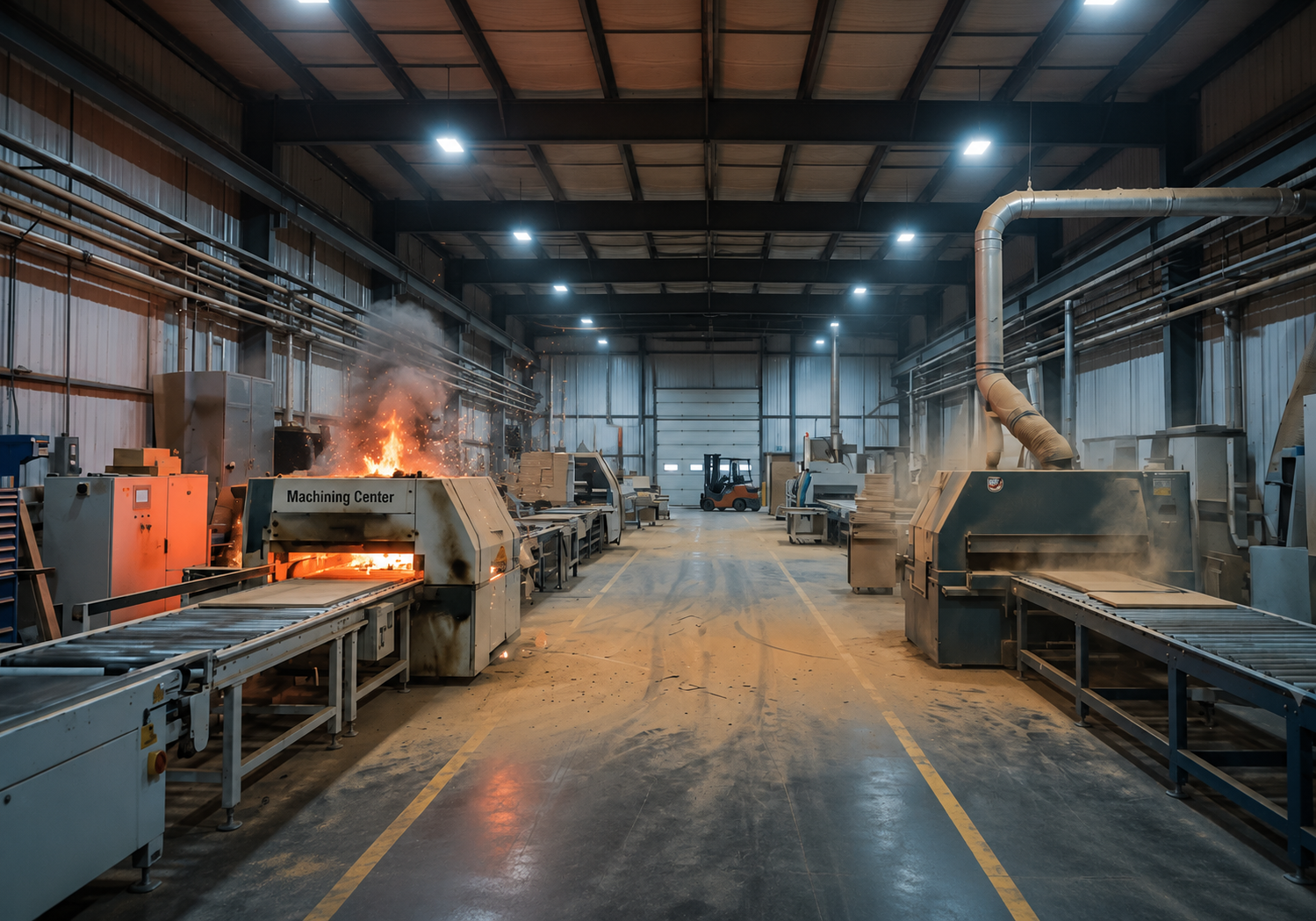
- Create serious safety risks like fire and explosions in high-risk industries.
Overall, poor air quality disrupts safety, efficiency, and operational reliability.
Key impacts include:
- Worker health risks and reduced efficiency
- Product contamination and inconsistent quality
- Equipment damage and increased downtime
- Fire and explosion hazards in sensitive environments
- Regulatory penalties and operational disruptions
These challenges are interconnected. When dust and fumes are not effectively controlled, they gradually erode operational efficiency and increase the cost of doing business.
Where This Problem Is Most Critical
Dust and fume extraction is most critical in industries with high emissions or strict compliance needs.
- Heavy fabrication and engineering generate dense dust and fumes affecting safety and equipment.
- Automotive industries face challenges in machining, coating, and finishing processes.
- Food and pharmaceutical sectors require controlled environments to prevent contamination.
- Chemical, petrochemical, oil & gas, and rubber industries deal with hazardous or combustible emissions.
- Poor air management in these sectors can lead to safety risks and compliance issues.
Across industries, effective extraction is essential for safe and compliant manufacturing.
Why Traditional / Outdated Systems Fail
Many facilities still rely on general ventilation systems that were designed for basic air circulation rather than targeted contaminant control. While these systems may provide some level of air movement, they are not effective in managing modern industrial emissions.
In real-world conditions, dust and fumes disperse quickly across the workspace. By the time general ventilation systems attempt to remove them, contaminants have already spread, reducing efficiency and increasing exposure.
Common limitations include:
- Lack of source-level capture, allowing contaminants to spread
- Inefficient airflow design leading to uneven extraction
- Inability to filter fine or hazardous particles
- High energy consumption with limited effectiveness
- Failure to meet evolving environmental and safety regulations
As industries scale and compliance requirements become stricter, these outdated systems become operational liabilities.
How Dust & Fume Extraction Systems Solve This
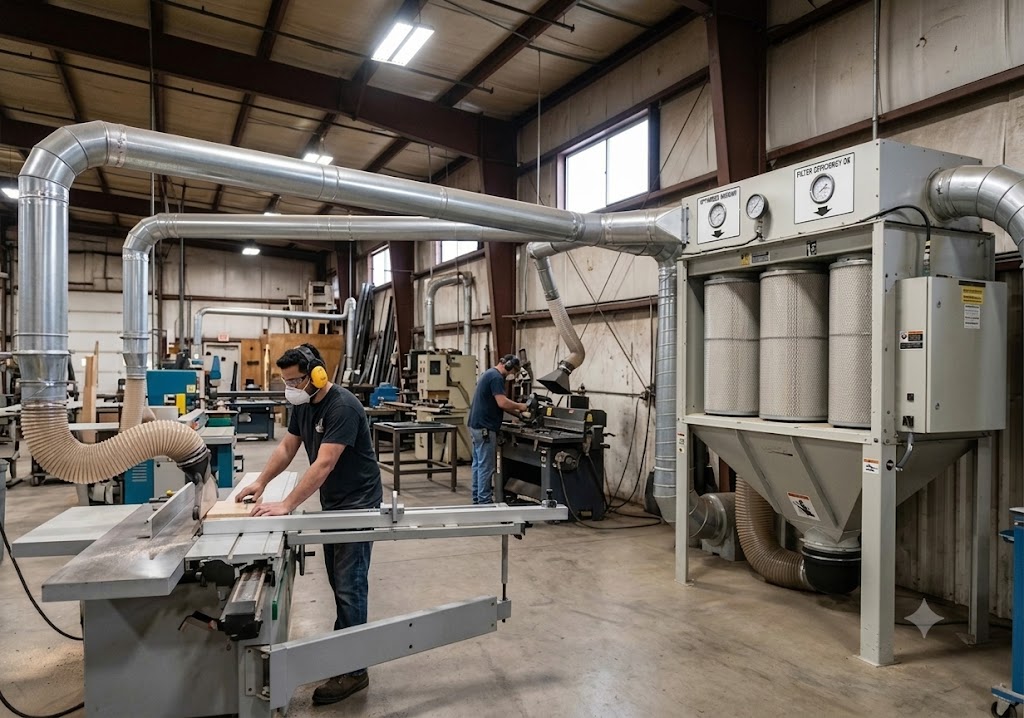
Modern dust and fume extraction systems control contaminants at the source for effective air management.
- Source-level extraction captures dust and fumes immediately at emission points.
- Multi-stage filtration removes particles of different sizes.
- Systems may include cyclones, cartridge filters, bag filters, or wet scrubbers.
- Dust is safely collected and disposed of as per regulations.
- Safety features like explosion-proof systems are used for combustible dust.
- Risk-based design ensures solutions match plant size, processes, and compliance needs.
This approach ensures efficient, safe, and compliant operations.
What This Means for Your Business
Investing in dust and fume extraction systems delivers tangible business benefits across productivity, safety, compliance, and cost management.
Cleaner air boosts productivity, reduces fatigue, and ensures consistent product quality with fewer rejections.
- Improves safety by lowering health risks and workplace accidents.
- Enhances efficiency in precision-driven operations.
- Supports compliance with strict industry regulations.
Overall, it strengthens performance, safety, and regulatory adherence.
Financially, the benefits include:
- Reduced maintenance and equipment downtime
- Lower risk of regulatory fines and legal issues
- Improved product yield and reduced waste
Edynamics Approach: Engineering for Performance and Compliance
At Edynamics, dust and fume extraction is not treated as a standalone product—it is approached as a strategic solution for improving operational performance and ensuring compliance.
Each project begins with a detailed assessment of the facility, processes, and risk factors. Solutions are tailored to industry-specific requirements, whether it is a fabrication unit with high particulate emissions, a pharmaceutical facility requiring contamination control, or a chemical plant dealing with hazardous fumes.
The focus is on:
- Risk-based system design aligned with operational realities
- Compliance-driven engineering based on local regulations
- Seamless integration with existing plant infrastructure
- End-to-end solutions including extraction, filtration, and disposal
This approach positions Edynamics as a trusted partner in building safer, more efficient, and compliant industrial environments.
Use Cases Across Industries
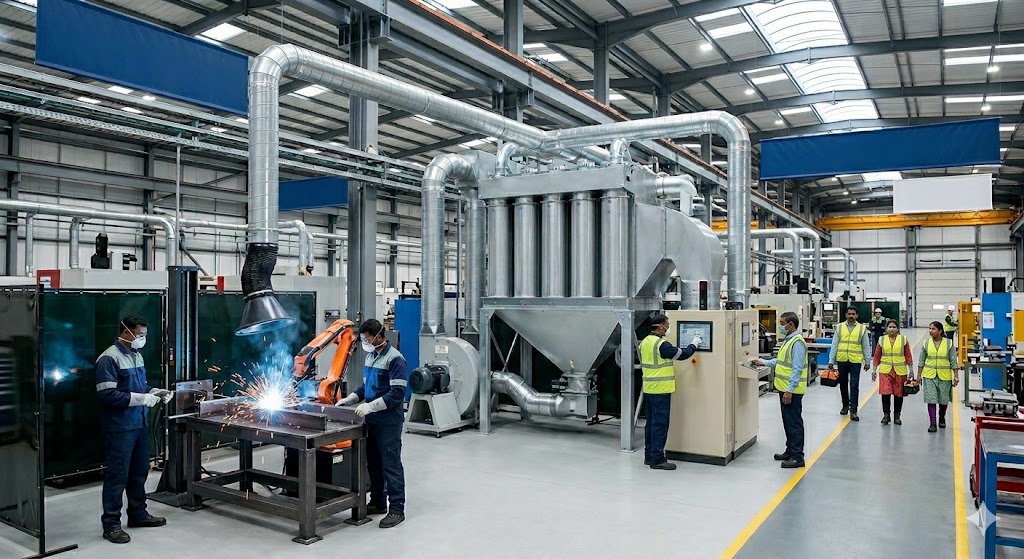
In a heavy fabrication unit, localized extraction systems capture welding fumes, improving safety and equipment life.
In an automotive plant, dust extraction ensures clean machining environments, enhancing precision and reducing defects.
In a pharmaceutical facility, advanced filtration systems maintain contamination-free environments for critical processes.
In a food processing unit, controlled airflow systems protect product hygiene and ensure compliance.
In a chemical plant, scrubber-based systems neutralize hazardous emissions, ensuring safe operations.
Don’t Ignore This Risk
Dust and fume-related challenges often develop gradually, making them easy to overlook until they impact operations.
Common warning signs include:
- Persistent dust accumulation on surfaces and equipment
- Frequent equipment breakdowns
- Worker complaints about air quality
- Difficulty in meeting regulatory standards
Ignoring these signs can lead to operational disruptions, safety incidents, and compliance failures.
Take the Next Step Toward Smarter Manufacturing
If your facility is facing challenges related to dust, fumes, or compliance, now is the time to act.
Get expert insights on improving air quality and efficiency.
In today’s industrial landscape, dust and fume extraction is a necessity—not an option.
As demands and regulations grow, effective air management becomes critical for safe and efficient operations. Organizations that invest in it build resilient, future-ready systems.
Clean air isn’t just about safety—it’s a strategic investment in long-term success.