Selecting an industrial blower often appears straightforward—compare airflow capacity, check motor rating, and finalize the purchase. However, in real-world industrial environments, blower selection is far more complex. Performance and cost are deeply interconnected, and what is not considered during selection often leads to inefficiencies later.
Across industries such as heavy fabrication, automotive manufacturing, food processing, pharmaceuticals, chemical processing, petrochemical plants, and oil & gas facilities, airflow requirements vary significantly. A blower that performs well in one application may fail in another.
What many buyers don’t realize is that initial specifications rarely tell the full story. Long-term performance, energy consumption, maintenance, and system integration ultimately determine the true cost of a blower system.
The Real Impact of Wrong Blower Selection
Choosing the wrong blower can create hidden operational and financial challenges that only become visible over time.
An undersized blower struggles to deliver required airflow, leading to poor dust or fume extraction. An oversized blower, on the other hand, consumes excess energy and increases operating costs. In both cases, system performance suffers.
Improper selection also affects equipment life. Continuous overloading or inefficient operation results in wear and frequent breakdowns. In industries like pharmaceuticals and food processing, poor airflow can even impact product quality and compliance.
Key impacts include:
- Inefficient airflow and poor system performance
- Increased energy consumption and operating costs
- Frequent maintenance and downtime
- Reduced equipment lifespan
- Risk of non-compliance in controlled environments
These issues highlight that the cheapest upfront option is rarely the most cost-effective in the long run.
Where This Problem Is Most Critical
Blower selection becomes critical in industries where airflow directly impacts process outcomes and safety.
In heavy fabrication and engineering, blowers must handle dust and heat simultaneously. Automotive plants require precise airflow for painting and machining. Food processing and pharmaceutical industries demand controlled environments to maintain hygiene and compliance.
Chemical processing, petrochemical plants, and oil & gas facilities rely on accurate airflow to manage hazardous gases and maintain safety. Rubber and tyre manufacturing units require efficient ventilation to handle heat and emissions.
In all these environments, incorrect blower selection can lead to serious operational inefficiencies.
Why Traditional Buying Approaches Fail
Many blower selection decisions are based on incomplete or oversimplified criteria.
- Focus only on airflow (CFM) without considering pressure
- Ignoring system resistance and ducting losses
- Selecting based on upfront cost rather than lifecycle cost
- Lack of consideration for process-specific conditions
- No integration with dust, fume, or ventilation systems
This approach often results in systems that look adequate on paper but fail in actual operation.
How to Choose the Right Industrial Blower
Effective blower selection requires a comprehensive understanding of system requirements and operating conditions.
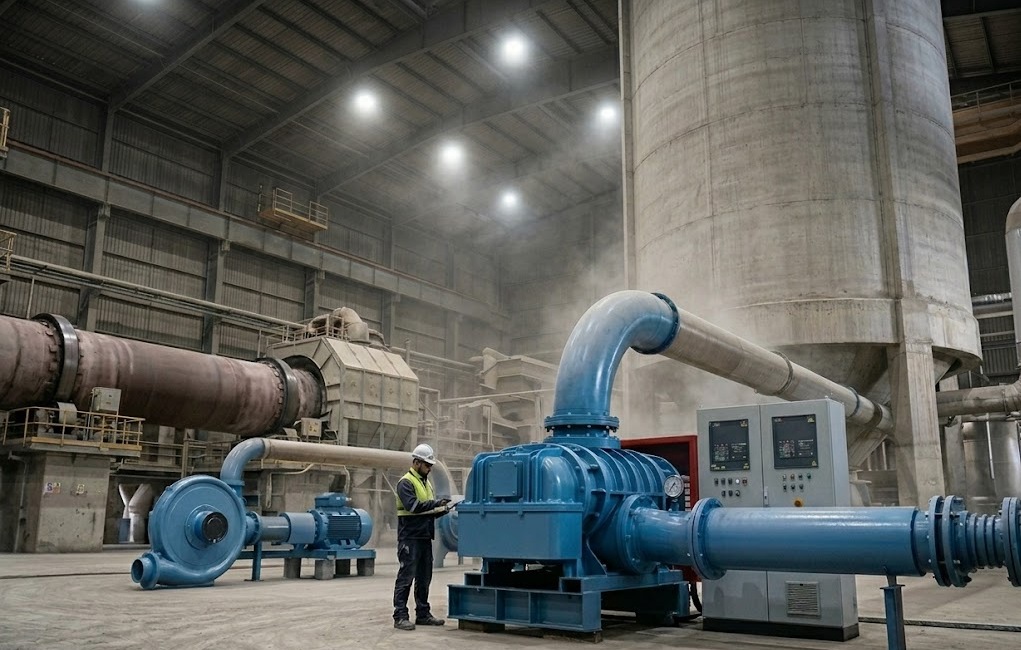
The first step is evaluating airflow and pressure needs together. Air volume alone is not enough—static pressure and system resistance must be considered to ensure proper performance.
Next is understanding the application. Dust-heavy environments require abrasion-resistant designs, while chemical industries need corrosion-resistant materials. High-temperature operations demand heat-resistant components.
Energy efficiency is another key factor. Selecting the right blower size and type ensures optimal performance without excessive power consumption.
Integration is equally important. Blowers must work seamlessly with dust extraction, fume control, and ventilation systems to deliver consistent results.
Key considerations include:
- Airflow and pressure balance
- System resistance and duct design
- Application-specific requirements
- Energy efficiency and operating cost
- Integration with overall system
This ensures that the blower delivers both performance and cost efficiency.
What This Means for Your Business
Making the right blower choice has a direct impact on operational efficiency and long-term costs.
Properly selected blowers improve airflow consistency, ensuring smooth process operation. Workers benefit from better air quality, improving productivity and safety.
From a cost perspective, energy-efficient systems reduce electricity consumption, while optimized performance lowers maintenance needs. This results in significant long-term savings.
Key benefits include:
- Improved system performance and reliability
- Lower energy and operating costs
- Reduced maintenance and downtime
- Enhanced safety and compliance
- Better return on investment
Edynamics Approach: Beyond Equipment Selection
At Edynamics, blower selection is treated as part of a larger engineering solution rather than a standalone purchase.
Each project begins with a detailed analysis of process requirements, plant layout, and airflow dynamics. Based on this, the most suitable blower type and configuration are selected.
The approach focuses on:
- Application-specific blower selection
- Lifecycle cost optimization
- Integration with dust and fume extraction systems
- Energy-efficient system design
This ensures that clients receive solutions that deliver long-term performance and value.
What This Means for Your Business
Effective fume control improves both safety and performance.
- Better worker productivity and reduced fatigue
- Lower risk of accidents and health issues
- Stronger compliance with regulations
- Reduced operational and legal risks
Ultimately, it leads to more stable and efficient operations.
Ensure the right fit for your application.
Choosing the right industrial blower is not just a technical decision—it is a strategic one. What may seem like a cost-saving choice initially can lead to higher expenses over time if performance is compromised.
By focusing on application-specific design, system integration, and lifecycle cost, businesses can ensure reliable airflow and long-term efficiency.
In modern manufacturing, the right blower doesn’t just move air—it drives performance, safety, and profitability.